








What's Happening?
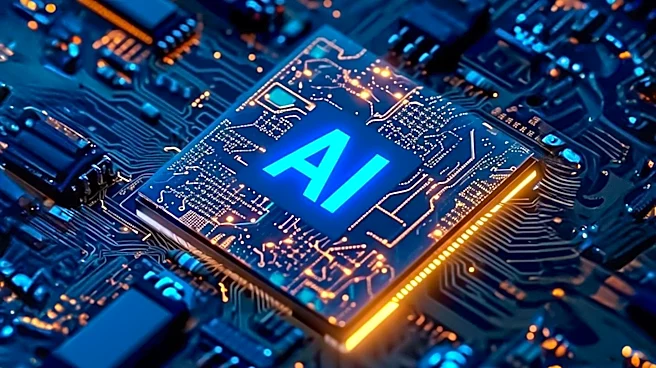
Artificial intelligence (AI) and automation are fundamentally changing how businesses operate, moving beyond simple task execution to intelligent workflow management. AI automation integrates AI with traditional automation tools to handle complex processes,
interpreting data, making decisions, and executing actions based on learned patterns or predefined rules. This allows businesses to automate repetitive tasks such as email sorting, document summarization, lead qualification, and report preparation. The core principle involves determining which parts of a workflow can be automated and which require human intervention, ensuring clear boundaries for AI software. In small businesses, AI automation combines automation, business rules, software integrations, and AI to complete processes, with AI handling interpretation and automation managing routine tasks. For larger enterprises, AI orchestration coordinates various business resources, integrating AI with traditional automation to execute complex processes, enhancing security, reducing operational strain, and fostering discussions about resilience. This shift is evident across various departments, including customer service, sales, marketing, finance, and human resources, where AI assists in tasks ranging from analyzing customer requests and updating CRM records to processing invoices and streamlining onboarding.
Why It's Important?
The integration of AI and automation is crucial for U.S. industries as it promises increased efficiency, faster processing, and reduced manual errors. By automating routine and information-heavy tasks, employees can shift their focus from administrative duties to more strategic activities requiring human judgment, creativity, and problem-solving. This leads to better scalability for businesses, allowing them to handle growing data volumes without proportional increases in manual labor. The ability of AI to interpret unstructured data and make dynamic decisions adds flexibility to workflows that traditional, rules-based automation lacks, making processes more adaptable to varying inputs and outcomes. Furthermore, the demand for AI skills in non-technical roles is growing, with job postings requiring AI skills in such positions increasing significantly. This indicates a broader transformation of the workforce, where professionals in fields like finance, marketing, and operations are increasingly expected to combine their domain knowledge with AI automation capabilities to improve workflows and support better decision-making. This evolution is vital for maintaining competitiveness and addressing labor shortages, particularly in sectors like manufacturing, where AI is redefining frontline roles to emphasize judgment and data interpretation.
What's Next?
The future of AI and automation in U.S. businesses will likely involve a continued evolution towards more sophisticated and integrated systems. Organizations are expected to move from isolated AI experiments to scalable, business-ready applications that prioritize security, data quality, and governance. This will involve custom generative AI solutions tailored to specific workflows, data, and business objectives, rather than relying solely on off-the-shelf tools. The focus will be on building intelligent automation layers that combine generative AI with workflow automation, allowing AI-powered systems to interpret information and initiate subsequent steps in business processes. This progression will see AI becoming an active participant in business processes, moving from AI assistants and copilots to AI-powered workflows and autonomous agents. Businesses will need to invest in upskilling their workforce to adapt to these evolving roles, emphasizing skills in AI supervision, data interpretation, and operational governance. The goal is not to eliminate human involvement entirely but to create a symbiotic relationship where AI handles repetitive tasks, freeing humans to focus on high-value, judgment-intensive activities, with continuous monitoring and improvement of AI systems being paramount.
Beyond the Headlines
The widespread adoption of AI and automation carries deeper implications for the U.S. economy and society. Ethically, it raises questions about job displacement and the need for robust reskilling and upskilling initiatives to ensure a smooth transition for the workforce. The shift towards AI-powered decision-making also necessitates careful consideration of bias in AI models, as historical data can perpetuate existing inequalities, as seen in past examples of biased recruitment tools. Legally, there will be increasing scrutiny on accountability for AI-driven outcomes, particularly in cases of erroneous advice or discriminatory practices. Culturally, the integration of AI into daily work will require a redefinition of what 'skill' and 'experience' mean, fostering a collaborative environment where humans and AI work in tandem. The long-term shift could lead to a more productive and efficient economy, but it also demands proactive policy-making and educational reforms to address the challenges of a rapidly evolving technological landscape, ensuring that the benefits of AI are broadly shared and its risks are effectively mitigated.