







What's Happening?
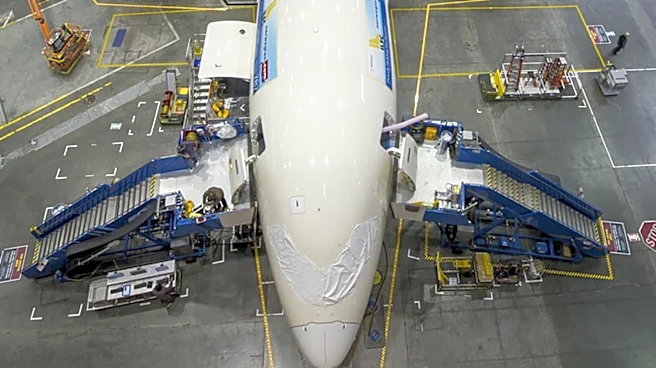
Boeing's North Charleston plant is experiencing ongoing challenges in ramping up its 787 Dreamliner production, with current output reportedly at seven or eight aircraft per month, falling short of the company's goal of 10 per month for 2026. The primary
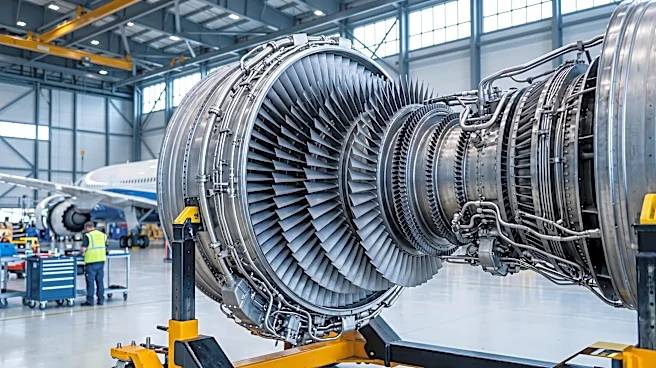
cause of this shortfall is a persistent shortage of GEnX jet engines from GE Aerospace, a critical supplier for the widebody program. While Boeing states its South Carolina factory is performing well, the bottleneck lies with external suppliers. Boeing Chief Financial Officer Jay Malave indicated that the final tally of 787 deliveries for 2026 would likely be closer to the lower end of the projected 90 to 100 aircraft range due to these delays. The company now aims to begin the transition to 'Rate 10' by December 31, with engine delivery performance remaining the key factor. Additionally, delayed certification of complex business-class seats has further hindered 787 deliveries. Boeing does not anticipate increasing 787 production to 12 planes a month until 2029, three years beyond its original target.
Why It's Important?
These production delays for the 787 Dreamliner have significant implications for Boeing's financial targets and its competitive standing against European rival Airbus. The slower production rate directly impacts Boeing's ability to meet its cash-flow goals, as the company is targeting annual cash flow of $10 billion by 2029, up from an estimated $2 billion this year. Delays in delivering aircraft can lead to penalties, strained customer relationships, and a loss of market share. Furthermore, the ongoing supply chain issues, particularly with engine manufacturers, highlight a broader vulnerability within the aerospace industry, affecting not only Boeing but also airlines awaiting new aircraft for fleet expansion and modernization. The situation underscores the complex interdependencies in global manufacturing and the challenges of scaling production in a high-demand sector. Boeing's ability to resolve these supply chain bottlenecks will be crucial for its long-term profitability and market leadership.
What's Next?
Boeing plans to continue working with GE Aerospace to resolve the engine supply shortages, aiming to initiate the transition to a production rate of 10 Dreamliners per month by the end of 2026. The company will also need to address the delayed certification of business-class seats to expedite deliveries. Boeing's $1 billion expansion of its South Carolina footprint, including a second 787 assembly plant expected to be completed in 2027, is intended to eventually enable production of 14 or more carbon-fiber jets a month. However, the immediate focus will be on stabilizing current production and meeting the lower end of its 2026 delivery projections. Analysts will closely monitor Boeing's progress in overcoming these supply chain hurdles and its ability to meet revised production targets, which will influence investor confidence and future stock performance. Airlines awaiting 787 deliveries will also be watching for updates on their order fulfillment timelines.
Beyond the Headlines
The persistent production challenges at Boeing's 787 program highlight deeper issues within the aerospace manufacturing ecosystem, particularly the fragility of global supply chains when faced with high demand and complex component requirements. This situation could prompt a re-evaluation of supplier diversification strategies and the potential for increased vertical integration within the aerospace industry to mitigate future risks. Furthermore, the delays could influence airlines' purchasing decisions, potentially leading them to favor manufacturers with more stable production outlooks, thereby shifting market dynamics. The reliance on a single critical supplier like GE Aerospace for engines also underscores the strategic importance of such partnerships and the need for robust contingency planning. This scenario may also accelerate the adoption of advanced manufacturing techniques and automation to reduce dependency on external factors and improve production predictability in the long run.