




What's Happening?
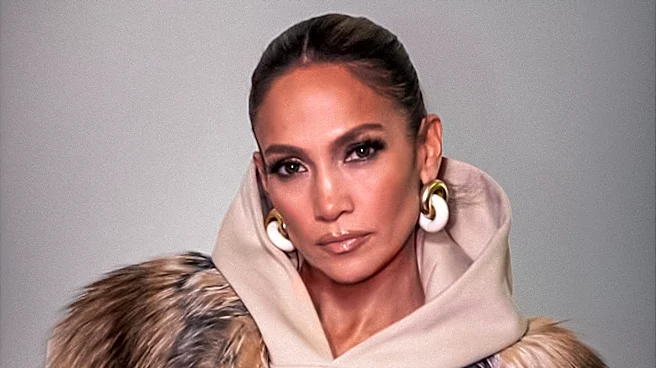
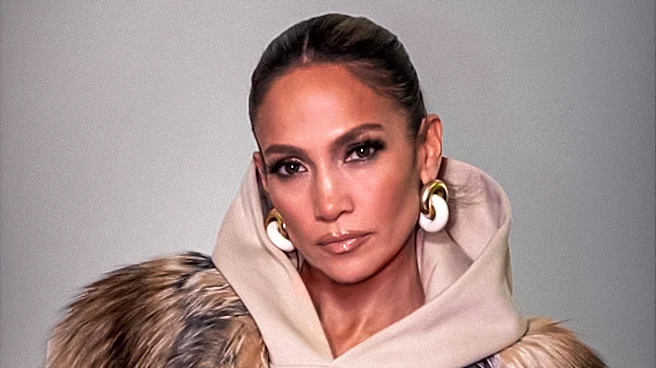
Jennifer Lopez recently stated that she faced racial barriers in Hollywood, claiming she had to create her own opportunities because she was not a "typical white actress." She noted that while the industry is "more diverse now," it is "still kind of the same"
in many ways, requiring individuals to "create their own lane." These comments were made during a podcast appearance on November 20. In response, Megyn Kelly, host of "The Megyn Kelly Show," criticized Lopez's remarks, calling them "ridiculous." Kelly labeled Lopez "at best a B-list talent," asserting that she is "not a great actress" and "not a great singer either." Kelly suggested that Lopez's "diva-esque behavior" and "over-the-top antics" were responsible for the stalling of her movie career, rather than racial discrimination.
Why It's Important?
This exchange highlights ongoing debates within the entertainment industry regarding diversity, representation, and the challenges faced by non-white artists. Lopez's comments reflect a perspective that systemic issues, such as racial bias, can limit opportunities even for successful individuals. Conversely, Kelly's rebuttal underscores a counter-narrative that attributes career trajectories to individual talent and professional conduct, rather than external factors like race. This public disagreement could influence how audiences and industry professionals perceive discussions about diversity in Hollywood, potentially polarizing opinions on whether racial barriers are a significant impediment or if personal attributes are the primary determinants of success. The differing viewpoints also bring into focus the broader societal conversation about grievance culture versus personal accountability.
What's Next?
The public discourse surrounding Jennifer Lopez's comments and Megyn Kelly's response is likely to continue, particularly within entertainment news and social media. Other public figures and industry insiders may weigh in, offering their perspectives on the challenges of diversity in Hollywood. This could lead to further discussions about the criteria for success in the entertainment industry, the role of race and ethnicity, and the impact of personal reputation. It may also prompt more artists to share their experiences, contributing to a wider dialogue on systemic issues versus individual responsibility within creative fields. The debate could also influence future casting decisions and industry initiatives aimed at promoting diversity.
Beyond the Headlines
Beyond the immediate controversy, this incident touches upon deeper societal issues concerning how success is defined and attributed in America. Lopez's assertion about racial barriers speaks to the persistent challenges faced by minority groups in various industries, suggesting that even high-profile individuals can encounter systemic limitations. Kelly's counter-argument, which emphasizes individual talent and behavior, reflects a perspective that often downplays the role of systemic discrimination. This clash of viewpoints highlights a fundamental tension in contemporary American society: whether individual outcomes are primarily a result of personal merit and effort, or if they are significantly shaped by broader societal structures and biases. The debate also raises questions about the responsibility of public figures to address social issues and the potential for their statements to spark wider cultural conversations.