
What's Happening?
Runners are increasingly adopting heart rate zone training, particularly 'Zone 2' cardio, for its purported benefits in improving aerobic capacity, race times, and longevity. However, many recreational
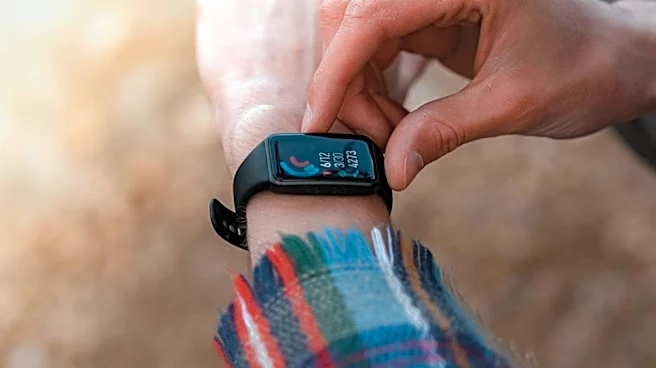
runners struggle to consistently maintain the correct heart rate zone, often drifting into a 'gray zone' that is neither truly easy nor sufficiently challenging. To address this, several smartwatch hacks are being recommended. These include prioritizing live heart rate zone data on watch screens, setting audio and haptic alerts for zone boundaries, and creating custom workouts with target ranges. Additionally, it is advised to properly calibrate heart rate zones, as default settings based on age-based formulas can be inaccurate by 10 to 20 beats. Using a chest strap for more accurate readings is also suggested, as wrist-based sensors can be less responsive.
Why It's Important?
The adoption of these smartwatch hacks holds significant importance for the fitness technology market and individual runners. For the fitness tech industry, it highlights a growing demand for more precise and user-friendly tools that go beyond basic tracking. Companies like Garmin, Apple, Coros, Polar, and Suunto, whose platforms are mentioned for custom workout creation, stand to benefit from users seeking to optimize their training with these advanced features. For runners, accurate heart rate zone training can lead to more effective workouts, potentially reducing injury risk and improving performance. The emphasis on proper zone calibration also underscores a shift towards personalized fitness, moving away from generic metrics. This could lead to increased sales of more accurate heart rate monitors, such as chest straps, impacting accessory manufacturers.
What's Next?
The trend towards more sophisticated and personalized heart rate zone training is likely to continue, driving further innovation in smartwatch and fitness tracker technology. Manufacturers may integrate more advanced algorithms for automatic zone calibration, potentially using lactate threshold heart rate estimates more widely. There could also be an increased focus on seamless integration between smartwatches and external heart rate monitors, making chest straps or arm bands more commonplace for serious runners. Educational content and coaching services that leverage these smartwatch capabilities are also expected to grow, helping users understand and implement these hacks effectively. As more runners experience the benefits, the demand for smartwatches with robust heart rate monitoring and customization features will likely increase.
Beyond the Headlines
Beyond the immediate benefits for runners, this development points to a broader cultural shift in how individuals approach personal health and fitness. The reliance on data-driven insights and wearable technology for optimizing physical performance reflects a growing desire for precision and control in health management. This trend could lead to ethical considerations regarding data privacy and the potential for over-reliance on technology, possibly diminishing intuitive understanding of one's body. Furthermore, the emphasis on 'Zone 2' cardio and its link to longevity highlights a societal focus on preventative health and extending lifespan, potentially influencing public health initiatives and the wellness industry at large. The integration of 'mini coaches' via haptic alerts also signifies a move towards ubiquitous, personalized guidance in daily life.