




What's Happening?
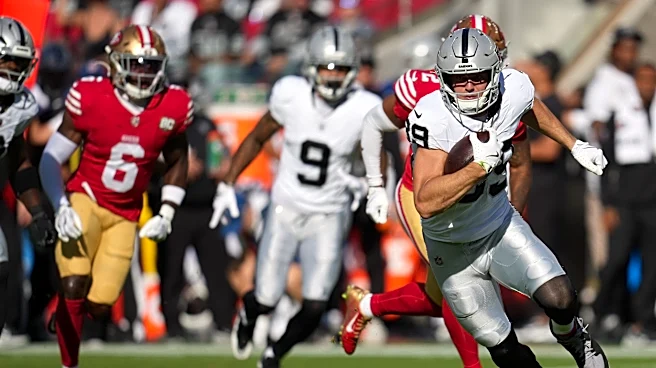
Ashton Jeanty, running back for the Las Vegas Raiders, is facing a challenging Week 10 in the 2026 NFL season, impacting his fantasy football value. Despite being the RB15 in fantasy points per game (15.5), his recent on-field performance has been quiet.
Jeanty has managed at least 15 fantasy points in four starts this season, largely due to his receiving contributions, with at least six targets or 36 receiving yards in seven of nine games, and three or more receptions in all nine contests. However, his rushing efficiency is a concern; among 24 running backs with over 100 attempts, Jeanty ranks last in EPA/rush (-0.28) and yards per attempt (3.2). This inefficiency is compounded by a below-average offensive line and a difficult Week 10 matchup against the Seattle Seahawks, who boast a strong run defense, ranking ninth in rushing EPA/play (-0.13) and seventh in ground success rate allowed (35.7%). The Seahawks also permit the third-fewest schedule-adjusted fantasy points per game to running backs (-3.3). With rookie quarterback Fernando Mendoza now under center, Jeanty might see more quick passes, but his overall outlook for Week 10 is considered less favorable compared to other options.
Why It's Important?
This situation highlights the volatile nature of fantasy football valuations, which are heavily influenced by player performance, team dynamics, and opponent matchups. For fantasy managers, Jeanty's declining rushing efficiency and tough upcoming schedule present a critical decision point, potentially leading to a benching or trade. Beyond fantasy, Jeanty's struggles on the ground could indicate broader issues for the Raiders' offense, particularly their offensive line's ability to create running lanes. A lack of a consistent ground game can put more pressure on a rookie quarterback like Fernando Mendoza, potentially hindering his development and the team's overall offensive production. The reliance on Jeanty's receiving skills, while valuable, may not be sustainable if his rushing game continues to falter, making the Raiders' offense more predictable and easier for opposing defenses to contain. This scenario underscores how individual player performance can ripple through team strategy and fan engagement, especially in the context of sports betting and fantasy leagues.
What's Next?
For Ashton Jeanty, the immediate future involves navigating a challenging Week 10 matchup against the Seattle Seahawks. His performance in this game will be crucial in determining his fantasy value and potentially his role within the Raiders' offense moving forward. If his rushing inefficiency persists against a strong defense, the Raiders' coaching staff might re-evaluate his workload or explore other options in the backfield. Fantasy managers will closely monitor his receiving volume, as that has been his most consistent source of points. The development of rookie quarterback Fernando Mendoza will also play a role; if Mendoza relies heavily on short passes to running backs, Jeanty's receiving targets could remain high, mitigating some of his rushing struggles. However, continued poor rushing efficiency could lead to a reduced snap count or a shift in offensive strategy to favor other players. The team's offensive line performance will also be under scrutiny, as improvements there could directly impact Jeanty's ability to gain yards on the ground in subsequent weeks.
Beyond the Headlines
The narrative surrounding Ashton Jeanty extends beyond his immediate fantasy football implications, touching upon the broader challenges faced by young running backs in the NFL. The league's increasing emphasis on passing offenses and the devaluation of the running back position mean that players like Jeanty must be versatile to maintain relevance. His reliance on receiving production highlights a trend where running backs are increasingly expected to be dual-threat players rather than just ground-and-pound specialists. This shift impacts player development, contract negotiations, and team building strategies. For the Raiders, Jeanty's situation also reflects the ongoing process of rebuilding and finding consistent offensive identity, especially with a new quarterback. The struggle to establish an efficient run game can expose weaknesses in offensive line play and play-calling, which can have long-term consequences for team competitiveness. Furthermore, the intense scrutiny from fantasy football communities adds another layer of pressure on players, where their weekly performance is dissected and directly impacts millions of participants.