






What's Happening?
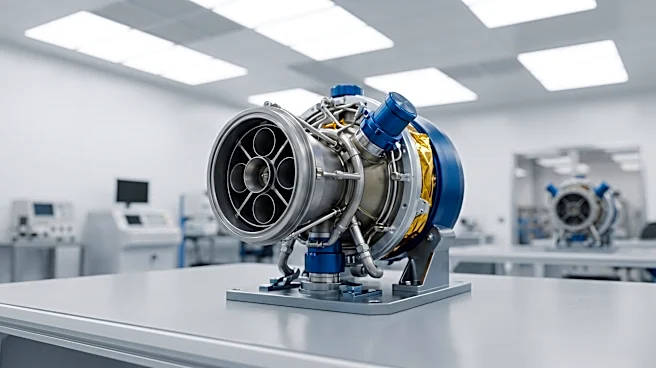
Moog Inc. has announced the successful completion and commissioning of a new ISO Class 8 certified clean room at its Niagara Falls facility. This state-of-the-art manufacturing environment is now fully operational and is designed to significantly increase
the company's capacity for assembling, integrating, and testing thrusters. The expansion is expected to boost thruster production by over 80%, directly supporting Moog's growing portfolio of defense and commercial spaceflight programs. The new clean room is seamlessly integrated with the existing Niagara Falls site, which already houses four high-altitude hot-fire test chambers and extensive engineering capabilities, reinforcing Moog's vertically integrated propulsion expertise. This development also led to the creation of dozens of new operations and engineering roles to accommodate the increased production demands and maintain high standards of quality and safety. Moog's propulsion systems have a 75-year history of innovation and precision engineering, having powered numerous missions across the solar system.
Why It's Important?
This expansion by Moog Inc. is strategically important for the U.S. defense and commercial spaceflight sectors. By significantly increasing its thruster production capacity, Moog is better positioned to meet the rising demand for advanced propulsion systems crucial for national security and space exploration initiatives. This move enhances the reliability and availability of critical components for defense systems and commercial satellites, reducing potential supply chain vulnerabilities. The creation of new jobs in operations and engineering at the Niagara Falls facility also provides a boost to the local economy and strengthens the skilled workforce in advanced manufacturing. Furthermore, Moog's continued investment in cutting-edge facilities and technology reinforces its leadership in precision motion and fluid controls, ensuring that U.S. space and defense programs have access to high-performance, domestically produced components. This development underscores the ongoing commitment to innovation and self-sufficiency within the U.S. aerospace and defense industries.
What's Next?
With the new ISO Class 8 clean room fully operational, Moog Inc. is expected to ramp up its thruster production to meet the increased demands from defense and commercial spaceflight programs. The company will likely focus on optimizing the new facility's operations and integrating the newly hired personnel into its advanced manufacturing processes. This expansion could lead to further contracts and partnerships within the aerospace and defense sectors, as Moog's enhanced capacity makes it a more attractive supplier. The company may also explore additional technological advancements and innovations in propulsion systems, leveraging its expanded capabilities and long-standing legacy in precision engineering. Continued investment in research and development, supported by the increased production capacity, could lead to the development of next-generation thrusters and control systems, further solidifying Moog's market position and contributing to future U.S. space and defense initiatives.
Beyond the Headlines
The completion of Moog's new clean room signifies more than just an increase in production; it reflects a broader trend of reshoring and strengthening domestic manufacturing capabilities in critical sectors. In an era of increasing geopolitical complexities and supply chain disruptions, having robust in-country production for defense and space components is vital for national security. This investment by Moog highlights the strategic importance of maintaining technological superiority and operational independence in space and defense. It also underscores the intricate relationship between private industry and national interests, where corporate expansion directly contributes to governmental objectives. The emphasis on an ISO Class 8 clean room indicates a commitment to the highest standards of quality and reliability, which are paramount for components used in sensitive space and defense applications, where failure is not an option. This move could also inspire other companies to invest in similar expansions, fostering a more resilient and advanced U.S. manufacturing base.