



What's Happening?
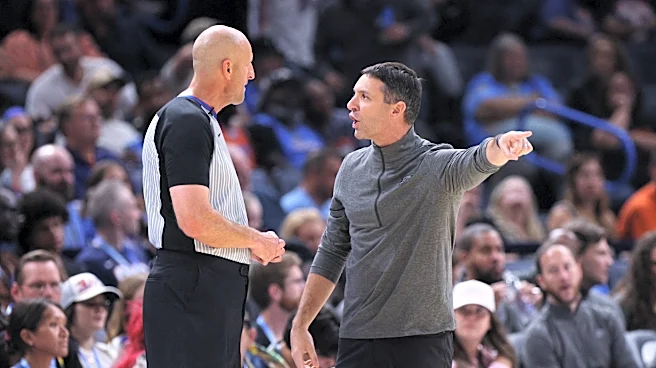
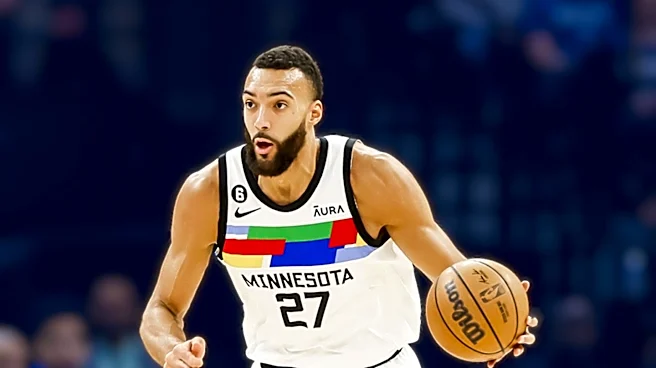
Golden State Warriors veteran Draymond Green has publicly criticized Minnesota Timberwolves center Rudy Gobert, asserting that Gobert needs to adopt a stronger veteran mindset. This comes after Timberwolves head coach Chris Finch expressed concerns that recent
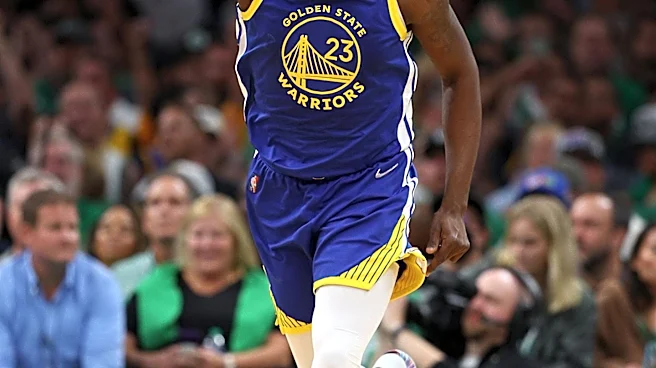
roster changes, specifically the loss of several veteran players like Mike Conley, Joe Ingles, and Kyle Anderson, could negatively impact Gobert. Finch noted that Gobert had lost teammates who understood how to communicate with him, a situation he was 'conscious' of. Green, a four-time NBA champion, found this admission 'bizarre' and stated that as a player in his 14th year, Gobert should be the one taking on the veteran role and facilitating communication, rather than needing specific communication approaches from his teammates. Green emphasized that a basic level of respect should exist, and Gobert's responsibility includes learning to communicate with younger players.
Why It's Important?
This commentary from a prominent player like Draymond Green highlights a significant aspect of team dynamics and leadership within the NBA, particularly for veteran players. For the Minnesota Timberwolves, the ability of their key players, especially a defensive anchor like Rudy Gobert, to integrate and lead the team is crucial for their success. If Gobert struggles with communication or leadership, as implied by Finch's concerns and Green's criticism, it could exacerbate the team's 'growing pains' following offseason roster changes. Effective communication and veteran leadership are vital for team chemistry and on-court performance, directly impacting the Timberwolves' competitive standing in the league. This situation also underscores the unwritten expectations placed on long-tenured players to foster team cohesion and mentor newer talent, regardless of their individual playing statistics.
What's Next?
The Minnesota Timberwolves will need to address the team chemistry and communication dynamics, particularly concerning Rudy Gobert's role as a veteran leader. Coach Chris Finch's acknowledged concerns suggest that this is an internal issue the team is aware of and likely working to resolve. Gobert, as a four-time Defensive Player of the Year and a player with extensive experience, is expected to step into a more prominent leadership role, especially in guiding the new-look Timberwolves. His ability to adapt and effectively communicate with his teammates will be a key factor in the team's performance throughout the upcoming season. The team's success will depend on how well these internal communication challenges are managed and if Gobert can embrace the veteran responsibilities outlined by Green.
Beyond the Headlines
The discussion surrounding Rudy Gobert's veteran status and communication style touches upon broader themes of leadership evolution in professional sports. In an era where player empowerment and individual brands are prominent, the traditional role of a veteran as a team unifier and mentor remains critical. Green's critique suggests a perceived gap between Gobert's on-court defensive prowess and his off-court or interpersonal leadership. This situation could influence how other teams evaluate veteran players, emphasizing not just their statistical contributions but also their ability to foster a cohesive team environment. It also raises questions about coaching strategies in managing diverse personalities and communication styles within a high-stakes professional setting, highlighting the complex interplay between individual talent and collective synergy.