


What's Happening?
The U.S. beverage industry is undergoing significant changes, with functionality now surpassing taste as the primary driver for consumer purchases, according to Technomic Senior Principals David Henkes and Donna Hood Crecca. Consumers are increasingly
seeking beverages that offer specific benefits such as energy, gut health, hydration, mental wellness, or protein intake. This shift is partly fueled by a growing interest in optimizing health and performance, a trend Technomic refers to as 'maxing.' Protein-enhanced beverages, for instance, are expanding beyond traditional juice and smoothie bars into mainstream categories like iced coffee. Additionally, beverages are becoming an 'affordable indulgence' for consumers who are cutting back on full dining-out experiences but still desire a treat. This trend is evident in both value-hunting for familiar favorites and intentional premiumization for special occasions. The beverage category currently accounts for nearly 30% of all consumer food and beverage spending, totaling approximately $677 billion annually, and is growing faster than the overall food and beverage industry.
Why It's Important?
This evolution in consumer behavior has substantial implications for the U.S. retail and foodservice sectors. Beverage manufacturers and retailers must adapt their product offerings and marketing strategies to align with the demand for functional benefits. Companies that can effectively communicate the health and wellness advantages of their products are likely to gain a competitive edge. The rise of beverages as an affordable indulgence also presents an opportunity for businesses to capture spending from consumers who are budget-conscious but still willing to splurge on smaller treats. This could lead to increased sales in convenience stores and other retail outlets that offer a diverse range of premium and functional beverages. Furthermore, the influence of GLP-1 medications, with projected usage climbing to 24% of adults by 2030, suggests a continued shift towards protein-forward and hydration beverages, potentially impacting alcohol consumption and necessitating strategic adjustments across the industry.
What's Next?
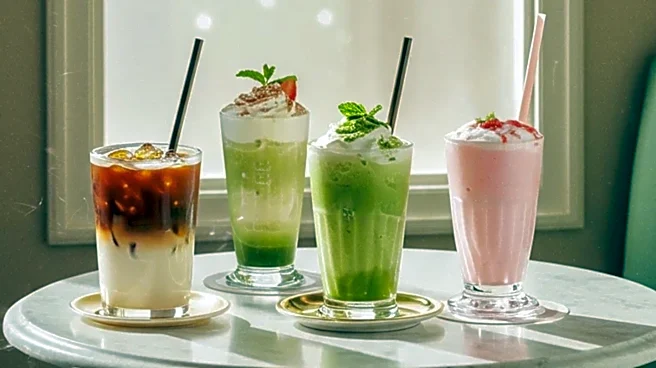
Looking ahead, the beverage industry is expected to see continued innovation in functional products, with a focus on clear and concise communication of benefits to avoid overwhelming consumers. Retailers and foodservice operators will likely prioritize curating focused functional lineups over offering an excessive array of options. The trend of 'Instagrammability' will also continue to drive beverage development, as visually appealing drinks become a key marketing tool for generating social media buzz. Foodservice establishments are anticipated to remain the primary testing ground for new beverage concepts due to lower financial risk and immediate sales feedback, before these trends scale into broader retail markets. This suggests that restaurants and cafes will play a crucial role in shaping the future of the U.S. beverage landscape, with successful innovations eventually making their way to grocery store shelves and convenience outlets.
Beyond the Headlines
The shift towards functional beverages and affordable indulgences reflects deeper societal trends related to health consciousness, economic pressures, and the influence of social media. The emphasis on 'maxing' highlights a growing consumer desire for proactive health management and performance optimization, which could extend beyond beverages to other food categories. The concept of beverages as an 'affordable indulgence' also points to a broader psychological need for small luxuries during times of economic uncertainty, suggesting a resilient consumer demand for treats that don't break the bank. Moreover, the role of social media in driving beverage trends underscores the increasing importance of visual appeal and shareability in product development and marketing. This digital influence is transforming how products are conceived, launched, and consumed, making 'Instagrammability' a de facto requirement for new offerings in a highly competitive market.