







What's Happening?
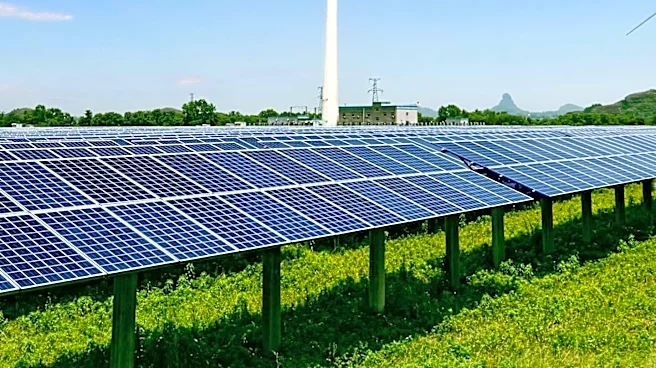
A new study from the University of Missouri’s Center for Rural Energy Security has found that wind and solar farms can bring significant economic gains to rural communities in the Midwest. Economist Adrienne Ohler, the lead researcher, compared economic factors
in counties with and without renewable power plants between 2001 and 2023. The study revealed that rural counties hosting solar energy development experienced 10% to 20% increases in employment and wages within the utilities, construction, and transportation sectors. Communities with wind energy infrastructure saw an approximate 7% increase in gross domestic product (GDP). This research indicates that renewable energy development does not substantially diminish agricultural economic activity, contradicting some concerns about taking farmland out of production.
Why It's Important?
This study provides crucial data for rural communities and policymakers considering renewable energy projects. The economic benefits, including increased tax revenue for school, fire, and ambulance districts, can be a vital boost for rural areas often facing economic challenges. James Owen, executive director of Renew Missouri, emphasizes that while these projects may not create many long-term jobs, the tax revenue is a significant advantage. Furthermore, the report's finding that renewable energy development does not negatively impact agricultural GDP, employment, or wages addresses a common concern among rural residents and agricultural stakeholders. This evidence can help inform local zoning and permitting decisions, potentially fostering more widespread adoption of renewable energy infrastructure in rural America.
What's Next?
The findings are likely to fuel ongoing discussions about renewable energy development in rural areas, especially as more communities in Midwestern and Great Plains states are passing ordinances to regulate such infrastructure. Local leaders are encouraged to examine policies in successful communities to replicate positive economic effects. The increasing number of counties with renewable energy ordinances, which grew by 45% in Iowa, Minnesota, Nebraska, and South Dakota over the past two years, suggests a trend towards more structured regulation. These ordinances often address aspects like vegetation management, decommissioning plans, and setback requirements. The challenge will be to balance property rights and community concerns with the economic opportunities presented by renewable energy, ensuring that regulations are reasonable enough to permit development while addressing local needs.
Beyond the Headlines
Beyond the immediate economic impacts, the study highlights a broader shift in rural economies. As traditional industries face challenges, renewable energy offers a new avenue for economic diversification and stability. The emphasis on domestic power generation from wind and solar, as noted by James Owen, also speaks to energy independence and reliability, reducing reliance on imported fossil fuels. However, the study also implicitly acknowledges the social complexities, such as potential divisions among neighbors over energy development and concerns about property values. This underscores the need for comprehensive community engagement and thoughtful policy design that considers both the economic benefits and the social fabric of rural life, ensuring that the transition to renewable energy is equitable and sustainable for all stakeholders.