
What's Happening?
PERGOLUX has announced that its smart pergolas and accessories are now compatible with Amazon Alexa, allowing users to control their outdoor living spaces through voice commands and the Alexa app. This
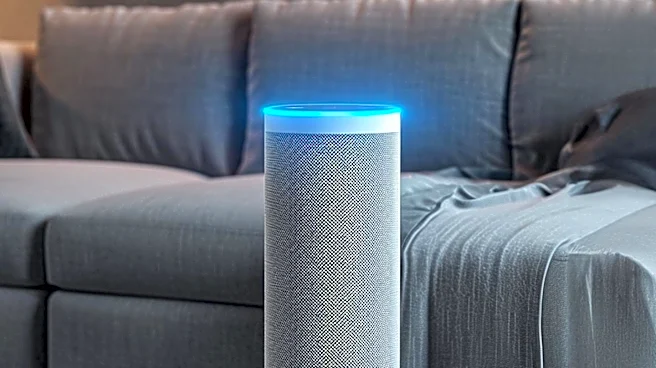
integration is facilitated by Matter-over-Thread technology, which enables connectivity across major smart home systems and allows for remote control. To utilize this feature, users need the Alexa App and a compatible Amazon Echo device, such as an Echo Pop, Echo (2nd Gen or newer), Echo Studio, Echo Plus (2nd Gen), Echo Dot (2nd Gen or newer), Echo Dot with Clock (3rd Gen or newer), or various Echo Show models (Echo Show 5 2021 2nd Gen or newer, Echo Show 8 20201 2nd Gen or newer, Echo Show 10 3rd Gen or newer, and Echo Show 15). Eero Mesh Wi-Fi and Eero Gateway devices are also listed as compatible. Once a compatible device is set up, users can follow Amazon's instructions to add the PERGOLUX product as a Matter smart accessory via the Alexa app. This connectivity allows for hands-free operation of pergola roofs, lights, and heaters, as well as the creation of automated schedules and routines.
Why It's Important?
The integration of PERGOLUX smart pergolas with Amazon Alexa signifies a growing trend in the smart home market towards broader interoperability and enhanced user convenience. By leveraging Matter-over-Thread technology, PERGOLUX products can connect to multiple smart home ecosystems, including Amazon Alexa, Google Home, Apple Home, and Samsung SmartThings, which is crucial for consumers who may use a mix of devices from different brands. This universal compatibility eliminates the need for proprietary hubs and allows users to manage their outdoor electronics alongside other smart devices within a single app. The ability to control pergolas, lighting, and heating with voice commands or automated schedules offers significant convenience, improving the functionality and enjoyment of outdoor living spaces. This development also highlights the increasing adoption of Matter as a standard for smart home devices, promising a more seamless and interconnected experience for U.S. consumers and potentially driving further innovation in home automation.
What's Next?
Following this integration, PERGOLUX users with compatible Amazon Echo devices can proceed to set up their smart pergolas through the Alexa app. The company anticipates that this will lead to increased adoption of its smart features, as consumers can now easily incorporate their outdoor spaces into their existing smart home ecosystems. PERGOLUX also offers support for other major smart home platforms, including Apple Home, Google Home, and Samsung SmartThings, ensuring broad accessibility. The continued rollout of Matter-enabled devices and the increasing prevalence of Thread border routers in common smart home devices mean that more consumers will likely find it easier to connect and automate their PERGOLUX products without needing additional hardware. Future developments may include more sophisticated automation options, deeper integration with other smart home routines, and potentially new accessories that leverage this universal connectivity standard.
Beyond the Headlines
This move by PERGOLUX to embrace Matter-over-Thread technology for its smart pergolas reflects a significant shift in the smart home industry towards open standards and enhanced interoperability. Historically, the smart home market has been fragmented, with devices often locked into specific ecosystems, leading to consumer frustration and limited functionality. Matter, developed by the Connectivity Standards Alliance (including Amazon, Apple, Google, and Samsung), aims to address this by providing a universal language for smart devices. The use of Thread technology further enhances this by creating a robust, local mesh network that allows devices to communicate even without an internet connection, improving reliability and responsiveness. This broader trend towards open standards could democratize smart home technology, making it more accessible and user-friendly for a wider range of consumers. For the U.S. market, this means a more cohesive and less complex smart home experience, potentially accelerating the adoption of smart outdoor living solutions and other connected devices.