



What's Happening?
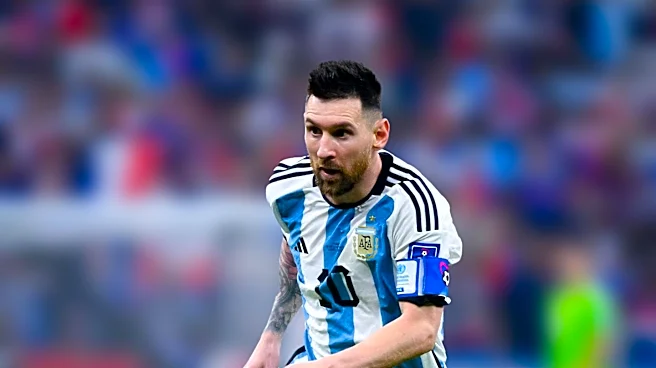
Argentina is preparing for the retirement of soccer icon Lionel Messi from its national team after 21 years. Messi, 39, is set to play his final international match on Tuesday against Benin, an event the Argentine soccer federation has dubbed 'the last
tango.' This friendly match has transformed into a national homage, with 85,000 tickets for Buenos Aires' largest stadium selling out in 90 minutes. Members of Argentina's 2022 World Cup-winning squad and their families have been invited to join the tribute. Messi's international career includes 125 goals, two Copa América titles, and a World Cup championship. His announcement in August that he would retire from the national team, following Argentina's loss to Spain in the World Cup final, prompted widespread expressions of gratitude and sadness across the nation. Despite continuing his club career with MLS team Inter Miami, his departure marks the end of an era for Argentine national soccer.
Why It's Important?
Lionel Messi's retirement from the Argentine national team signifies a profound cultural and emotional shift for the soccer-crazed nation. For years, Messi's journey with the national team mirrored Argentina's own struggles and triumphs, serving as a source of national pride amidst political and economic instability. His eventual World Cup victory in 2022 solidified his status as a national hero, transforming a sometimes-contentious relationship with fans into one of unwavering adoration. This farewell is important because it closes a chapter on a player who, like Diego Maradona before him, became a symbol of Argentine identity and resilience. The collective outpouring of emotion, from sold-out stadiums to widespread tributes and murals, underscores the deep connection between sports figures and national sentiment in Argentina. His departure leaves a void not just in terms of athletic prowess but also in the collective psyche of a nation that found joy and unity in his performances.
What's Next?
Following Lionel Messi's final international match, the Argentine national team will face the challenge of transitioning to a new era without its most iconic player. Coach Lionel Scaloni has indicated that the decision regarding who will inherit Messi's No. 10 jersey will be made after his final game, highlighting the symbolic weight of his departure. Messi will continue his club career with Inter Miami, where his contract extends through the 2028 season, meaning fans can still watch him play at a professional level. However, the unique ritual of watching him carry Argentina's hopes and anxieties in international competitions will cease. The focus will shift to developing new talent and establishing a new team dynamic capable of maintaining Argentina's competitive edge on the global stage. The emotional impact on fans will likely linger, as they come to terms with the absence of a player who many believed could achieve the unimaginable.
Beyond the Headlines
Lionel Messi's farewell transcends mere sports news, touching upon deeper sociological and cultural implications for Argentina. His career, marked by initial skepticism from some Argentines who perceived him as an outsider, eventually culminated in universal adoration after his World Cup win. This trajectory highlights the complex relationship between national identity, athletic achievement, and public perception. Messi's quiet demeanor, initially contrasted with Diego Maradona's fiery persona, eventually resonated with a nation that found in him a symbol of perseverance and ultimate triumph. The widespread tributes, including murals, documentaries, and a giant replica jersey, reflect how sports figures can become integral to a nation's cultural narrative, offering respite and joy during challenging times. His departure prompts reflection on the enduring power of sports to unite and inspire, and the challenge of finding new symbols of national greatness in a post-Messi era.