

What's Happening?
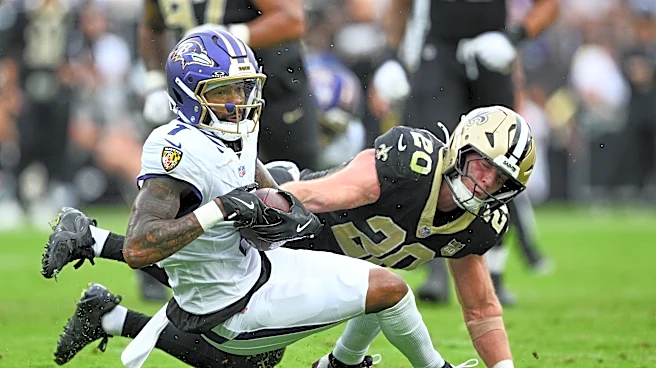
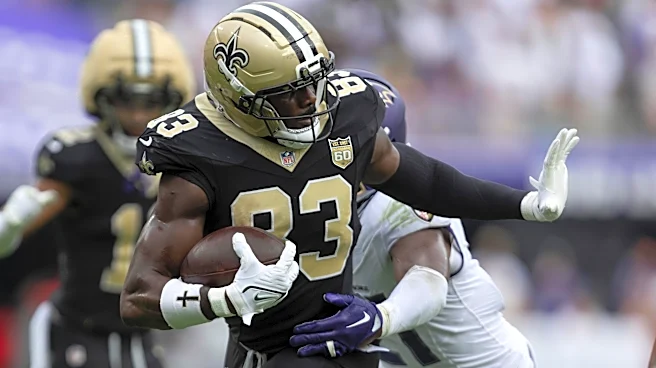
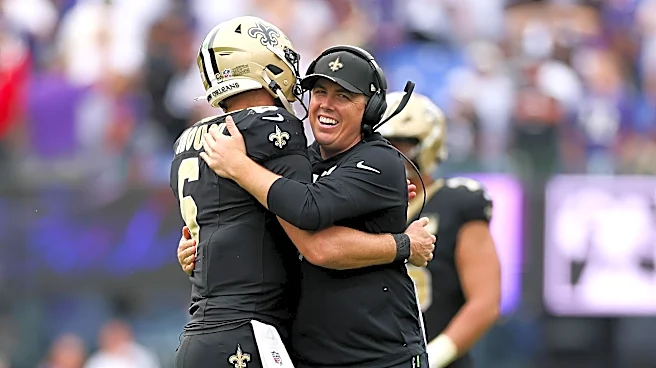
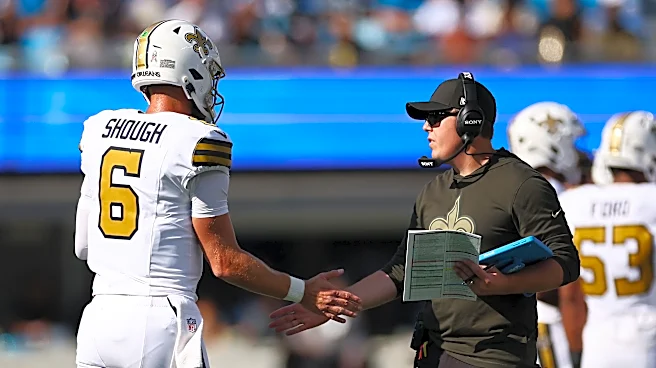
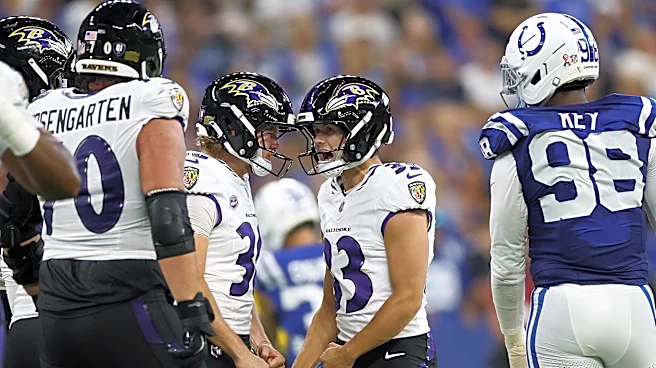
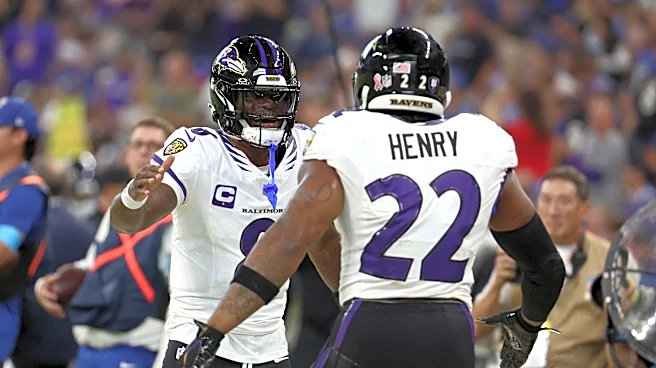
New Orleans Saints quarterback Tyler Shough scored a controversial touchdown with less than a minute remaining in regulation, leading his team to a 24-17 upset victory over the Baltimore Ravens. The play occurred on a fourth-and-goal situation from the Ravens'
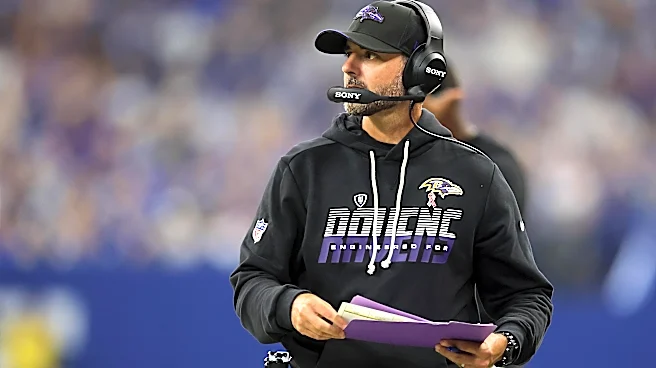
one-yard line. Shough executed a quarterback sneak, and while referees on the field signaled a touchdown, replay reviews suggested that he might have been short of the goal line. Despite the visual evidence from replays, the on-field call stood. Adding to the controversy, replays also indicated that Ravens player Roquan Smith committed a facemask penalty on Shough during the play, which went uncalled. This decisive score completed a comeback for the Saints, with Shough accounting for two touchdowns in the fourth quarter. Ravens head coach Jesse Minter acknowledged the subjective nature of such calls, stating, 'It is what it is, honestly.'
Why It's Important?
This controversial touchdown has significant implications for both teams and the broader NFL landscape. For the New Orleans Saints, it represents a crucial early-season victory, demonstrating their ability to compete against strong opponents and potentially shifting perceptions of their prospects for the 2026 season. The win, secured under contentious circumstances, could build team morale and confidence. Conversely, for the Baltimore Ravens, the loss highlights potential issues with late-game focus and defensive execution, as noted by their head coach. The uncalled facemask penalty and the disputed touchdown call could fuel discussions about officiating consistency and the impact of replay review in critical moments of NFL games. Such outcomes can influence playoff races, team standings, and even coaching evaluations as the season progresses, underscoring the fine margins that often determine success in professional football.
What's Next?
Following this controversial game, the NFL's officiating department may face scrutiny regarding the uncalled facemask penalty and the decision to uphold the touchdown call. While the outcome of the game will stand, there could be internal reviews or public statements from the league addressing the officiating. For the Saints, the focus will shift to maintaining momentum from this upset win as they prepare for their next opponent. For the Ravens, the coaching staff will likely prioritize addressing the team's late-game performance and defensive discipline to prevent similar collapses in future matchups. Fans and media will undoubtedly continue to debate the legitimacy of the touchdown, potentially influencing narratives around both teams for the remainder of the season. The incident could also contribute to ongoing discussions about potential rule changes or enhancements to the replay review system in the NFL.
Beyond the Headlines
The incident transcends a simple game outcome, touching upon the inherent human element in sports officiating and the limitations of technology in resolving all disputes. The 'subjective' nature of calls, as acknowledged by Coach Minter, underscores the challenge of achieving perfect accuracy in high-speed, high-stakes athletic contests. The uncalled facemask, coupled with the disputed touchdown, fuels a broader conversation about fairness and the psychological impact of perceived injustices on players and fans. It also highlights the power of social media and instant replays in dissecting every moment, often leading to widespread public debate and conspiracy theories, regardless of official rulings. This event serves as a reminder that even with advanced technology, the interpretation of rules and the judgment of officials remain critical components of professional sports, often shaping not just game results but also public trust and engagement.