





What's Happening?
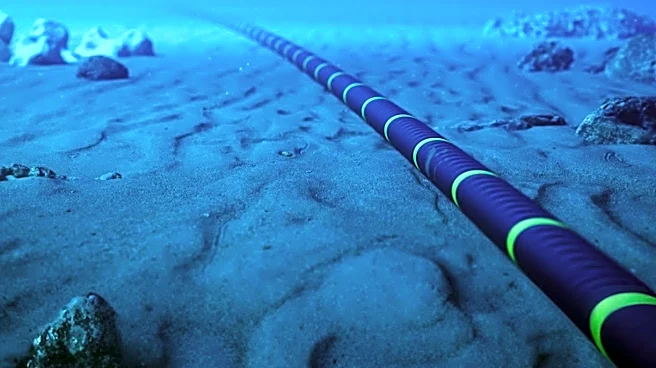
The European Union and the European Investment Bank (EIB) are providing significant financial backing for the Medusa Submarine Cable System, a project aimed at strengthening digital links across the Mediterranean. A €11.1 million EU grant, channeled through
the EIB, will support the terrestrial extension of the Medusa system from its Egyptian landing point in Port Said to Jordan, with a specific focus on connecting research and education institutions. Separately, the EIB is providing a loan of up to €60 million to support the Medusa Submarine Cable System across the Mediterranean. This initiative, driven by AFR-IX Telecom, a Spanish telecom and infrastructure operator, seeks to improve the digital economy and expand access to faster, more reliable digital connections between Europe, North Africa, and the Middle East. The project is a flagship under Global Gateway, the EU’s strategy for sustainable infrastructure and international partnerships, and aims to link approximately 500 research and education institutions in North Africa and Jordan with their European counterparts.
Why It's Important?
This investment is crucial for bridging the digital divide and fostering greater collaboration between Europe and its Mediterranean partners. Enhanced digital connectivity is fundamental for economic development, innovation, and educational advancement. By providing faster and more reliable internet access, the Medusa system will support the growth of digital economies, facilitate scientific research, and improve access to public services in the connected regions. The focus on research and education institutions will enable better data exchange and joint projects, fostering a more integrated academic and scientific community. Furthermore, diversifying digital routes across the Mediterranean will strengthen network resilience, which is vital for economic stability and security in an increasingly digital world. This project also reinforces the EU’s Global Gateway strategy, demonstrating its commitment to building trusted infrastructure and strengthening international partnerships.
What's Next?
The project is already underway, with the first phase connecting France, Morocco, and Tunisia completed and providing services. The EIB loan is supporting the second phase, for which cable deployment is in progress. The EU grant will facilitate the terrestrial extension to Jordan, specifically targeting research and education connectivity. Future steps will involve the full deployment of the 8,000-kilometer cable system with its 21 landing points, linking various countries across Southern Europe, North Africa, and the Middle East. The system's advanced technology, featuring 24 fiber pairs and an open architecture, is designed to support future digital services like 5G, cloud computing, and artificial intelligence, indicating ongoing technological advancements and service expansions as the infrastructure becomes fully operational.
Beyond the Headlines
The Medusa project represents more than just a physical cable; it symbolizes a strategic effort to integrate the Mediterranean region digitally and economically with Europe. This initiative has significant geopolitical implications, as it strengthens the EU's influence and partnerships in North Africa and the Middle East through tangible infrastructure development. By fostering digital cooperation, the project can help mitigate regional disparities, promote stability, and create new avenues for cultural and intellectual exchange. The emphasis on connecting research and education communities could lead to long-term benefits in scientific discovery and human capital development, potentially fostering a new generation of innovators and researchers across the Mediterranean basin. It also highlights the growing importance of digital infrastructure as a tool for international diplomacy and development.