



What's Happening?
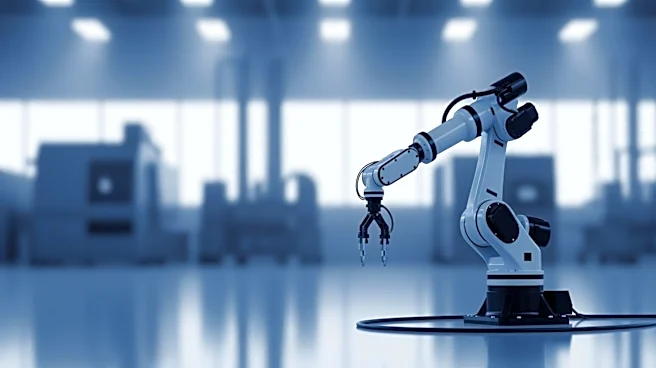
Mantis Robotics has launched the MR-X, a dual-arm robot designed to operate without safety fences or cages. The MR-X features embedded physical AI capabilities, allowing it to work alongside human workers safely. This new robot builds on the company's
previous model, the MR-1, which demonstrated the ability to achieve industrial speeds without compromising safety. The MR-X is equipped with the Mantis SafetyCore platform, a reflex system that provides continuous awareness of its surroundings, eliminating the need for external safety infrastructure. The robot can lift up to 70 pounds and move at high speeds, offering flexibility in automation configurations for complex environments.
Why It's Important?
The introduction of the MR-X represents a significant advancement in industrial robotics, particularly in terms of safety and efficiency. By eliminating the need for safety fences, the MR-X allows for more flexible and cost-effective automation solutions. This development could lead to increased adoption of robotics in various industries, as companies seek to enhance productivity and reduce operational costs. The MR-X's ability to operate safely alongside humans also addresses concerns about workplace safety, making it an attractive option for businesses looking to integrate robotics into their operations. As the demand for automation continues to grow, innovations like the MR-X could play a crucial role in shaping the future of industrial robotics.
What's Next?
Mantis Robotics plans to showcase the MR-X at the Automate trade show, where attendees can experience its real-time safety reflexes firsthand. The company is likely to continue developing its technology to further enhance the capabilities and applications of its robots. As the MR-X gains traction in the market, Mantis may explore partnerships and collaborations to expand its reach and impact. The success of the MR-X could also inspire other robotics companies to develop similar fenceless solutions, potentially leading to a broader shift in the industry towards more flexible and integrated automation systems.