




What's Happening?
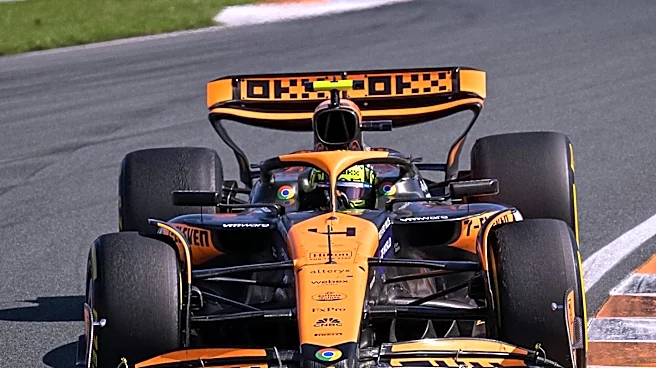
Lando Norris, the McLaren driver who secured third place at the Spanish Grand Prix, faced criticism from former Haas Formula 1 team principal Guenther Steiner for drinking Coca-Cola in the cooldown room before the podium ceremony. An F1 official reportedly
told Norris to stop consuming the beverage, to which Norris responded that he was allowed to drink what he liked after completing a race. Steiner deemed Norris's actions unprofessional, suggesting that a professional driver should be aware of what is permissible. The incident gained significant attention online, with many fans finding it amusing, while Steiner emphasized the importance of adhering to sponsor agreements, implying that rival soft drink producers might be F1 sponsors. Despite the controversy, Steiner acknowledged that the incident inadvertently provided good publicity for Coca-Cola.
Why It's Important?
This incident highlights the intricate relationship between sports, sponsorship, and athlete conduct in high-profile events like Formula 1. The F1 ecosystem relies heavily on corporate sponsorships, and any deviation from these agreements, even seemingly minor ones like a driver consuming a non-sponsor's product, can create tension. For athletes, it underscores the constant scrutiny they face, not just for their performance but also for their behavior off-track, particularly in moments visible to the public and media. The differing reactions from fans and industry figures like Steiner reveal a broader debate about professionalism versus individual expression in sports. While some view it as a trivial matter, others see it as a breach of contractual obligations and a potential threat to sponsor relationships, which are crucial for the financial health of the sport and its teams.
What's Next?
The immediate aftermath of this incident will likely involve a review of F1's sponsorship guidelines and potentially clearer communication to drivers regarding permissible conduct in official areas. While Norris's team, McLaren, has not publicly commented on the specific incident, it is probable that internal discussions will occur to prevent similar situations in the future. The increased public attention on this seemingly minor event could lead to stricter enforcement of sponsorship rules during post-race procedures. For Norris, while the incident may be quickly forgotten by many, it serves as a reminder of the constant pressure on F1 drivers to maintain a professional image and adhere to commercial agreements, even in moments of personal relief after a demanding race.
Beyond the Headlines
Beyond the immediate controversy, this event touches upon the commercialization of sports and the extent to which athletes' personal choices are governed by corporate interests. It raises questions about the balance between a driver's right to personal comfort and the commercial obligations of the sport. The viral nature of the incident also demonstrates the power of social media in amplifying seemingly small events, turning them into significant talking points. This constant digital scrutiny means that every action of a public figure, no matter how minor, can be dissected and debated, influencing public perception and potentially impacting brand relationships. It also subtly highlights the competitive landscape among beverage companies vying for visibility in global sports, where even an unplanned appearance can generate significant brand exposure.