


What's Happening?
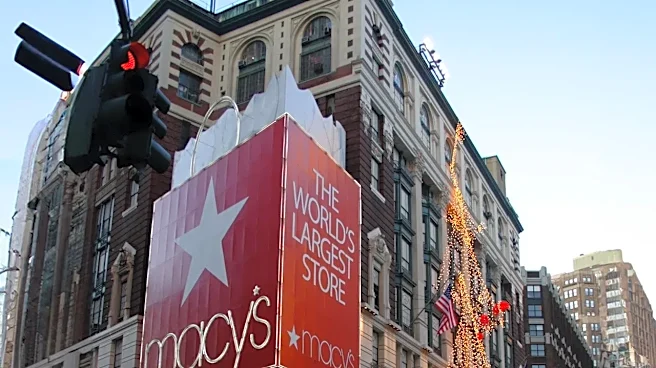
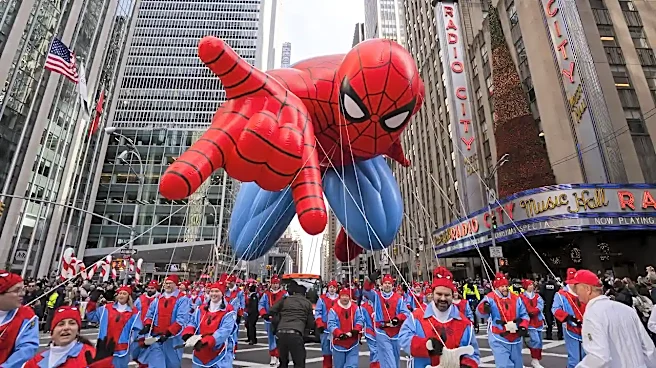
The Macy's Thanksgiving Day Parade is celebrating its 100th anniversary, marking a century of transforming Manhattan's streets into a holiday tradition. Originating in 1924 as the Macy's Christmas Parade, its initial purpose was to kick off the holiday shopping
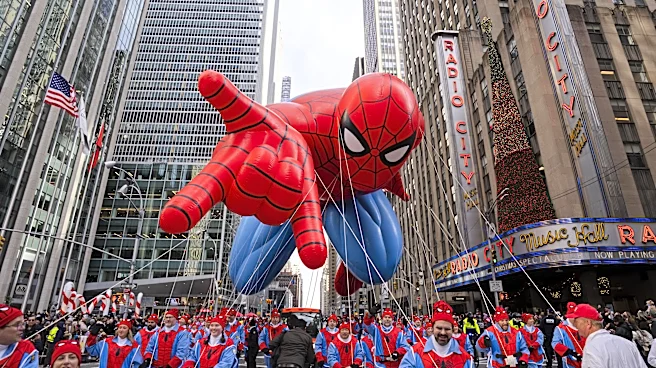
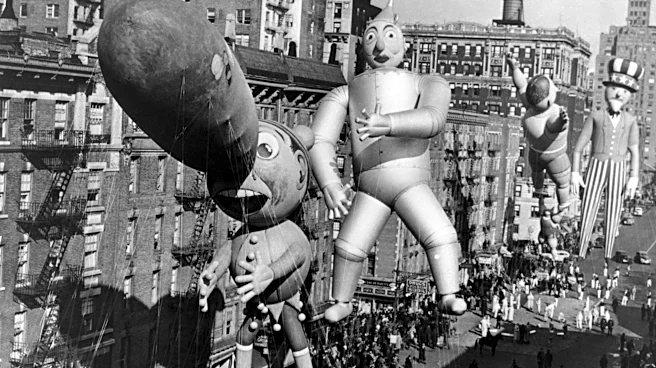
season and attract customers to the retailer's expanded Herald Square flagship store. Over the decades, the parade has evolved significantly, featuring live animals from the Central Park Zoo in its early years, followed by the introduction of giant character balloons like Felix the Cat in 1927 and Mickey Mouse in 1934. The parade went on hiatus during World War II but returned triumphantly in 1945. Its national television broadcast debut on CBS in 1947 brought the spectacle to homes across the country. Iconic additions include the Radio City Rockettes' first street performance in 1958 and the enduring presence of characters like Snoopy and Tom Turkey. The parade has also navigated challenges, such as a helium shortage in 1955 and a significant balloon mishap in 1997 that led to safety overhauls. In 2020, it adapted to the global pandemic with a scaled-back, broadcast-only procession.
Why It's Important?
The Macy's Thanksgiving Day Parade holds significant cultural and economic importance in the United States. Culturally, it has become an integral part of the Thanksgiving holiday, watched by millions nationwide and serving as a symbol of the festive season's unofficial start. Its long history reflects evolving entertainment trends, from live zoo animals to sophisticated character balloons and celebrity appearances, making it a living archive of American popular culture. Economically, the parade was initially conceived as a marketing tool to boost holiday shopping, a role it continues to play by generating excitement and drawing attention to Macy's and the broader retail sector. The event also drives tourism to New York City, with millions of spectators lining the streets, contributing to the local economy through hospitality, dining, and retail. Its consistent broadcast presence on national television further solidifies its status as a major advertising platform, influencing consumer behavior during the crucial holiday shopping period. The parade's resilience through historical events like wars and pandemics underscores its enduring significance as a unifying national spectacle.
What's Next?
As the Macy's Thanksgiving Day Parade enters its second century, it is expected to continue its tradition of innovation while maintaining its core elements. Future parades will likely feature new character balloons, reflecting contemporary popular culture and entertainment trends, alongside classic favorites. Technological advancements may also play a role in enhancing the parade experience, both for live spectators and television viewers, potentially through augmented reality or more interactive elements. Organizers will continue to prioritize safety measures, especially concerning balloon handling and crowd control, building on lessons learned from past incidents. The parade's role as a platform for musical performances and celebrity appearances is also likely to evolve, incorporating current artists and entertainment figures. Furthermore, its economic function as a kick-off to the holiday shopping season will remain central, with Macy's continuing to leverage the event for brand promotion. The parade's ability to adapt to societal changes, as demonstrated during the pandemic, suggests it will remain a dynamic and enduring American tradition for years to come.
Beyond the Headlines
Beyond its immediate spectacle, the Macy's Thanksgiving Day Parade represents a fascinating intersection of commerce, culture, and public spectacle in America. Its origins as a marketing ploy by a department store highlight the deep historical ties between retail and public celebration, demonstrating how commercial interests can shape national traditions. The evolution of the parade's attractions, from live animals to increasingly complex inflatable characters, mirrors broader technological and artistic advancements in entertainment and advertising. The event also serves as a powerful symbol of collective national identity, bringing diverse communities together, both physically in New York City and virtually through television broadcasts, to share a common experience. The challenges the parade has faced, such as safety concerns and adapting to global crises, underscore its resilience and the continuous effort required to maintain such a large-scale public event. It reflects a uniquely American blend of consumerism, showmanship, and community spirit, making it more than just a parade but a cultural institution that adapts and endures.