



What's Happening?
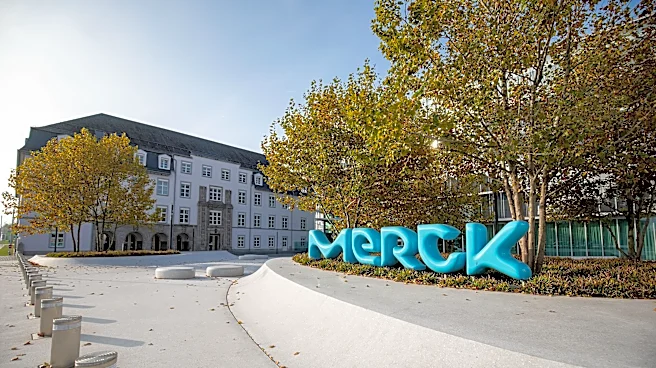
Merck Healthcare, known as MSD outside the United States and Canada, has entered into an agreement with Isomorphic Labs to collaborate on the development of oncology drug candidates. Under the terms of the deal, Isomorphic Labs will utilize its drug-design
engine, IsoDDE, in conjunction with selected proprietary Merck datasets. The objective is to discover small-molecule candidates targeting a specific oncology target. Merck will retain responsibility for the preclinical and clinical development, manufacturing, and commercialization of any resulting drug candidates. Isomorphic Labs is set to receive an upfront payment and will be eligible for milestone payments and tiered sales royalties. A key aspect of the agreement is an option for Merck Healthcare to help fund the development of these candidates, which would lead to higher royalty rates for Isomorphic Labs. This partnership follows Isomorphic Labs' recent successful Series C funding round, which raised $5 billion and was co-led by Greenoaks and Sequoia Capital.
Why It's Important?
This collaboration is significant for the pharmaceutical industry, particularly in the field of oncology, as it combines Merck's extensive drug development and commercialization capabilities with Isomorphic Labs' advanced artificial intelligence and machine learning (AI/ML) driven drug-design engine. The integration of AI/ML in drug discovery, as highlighted by George Addona, SVP and Head of Discovery, Preclinical Development and Translational Medicine at Merck Research Laboratories, is crucial for accelerating the identification of potential drug candidates. This partnership could lead to more efficient and potentially faster development of new treatments for cancer, addressing a critical area of unmet medical need. The co-funding option also demonstrates a novel approach to risk-sharing and incentivization in pharmaceutical partnerships, potentially setting a precedent for future collaborations in the sector. For Isomorphic Labs, this deal validates its technology and provides a clear pathway for its innovative drug-design engine to contribute to real-world drug development.
What's Next?
Following this agreement, Isomorphic Labs will commence using its IsoDDE engine and Merck's datasets to identify small-molecule candidates for the specified oncology target. Merck will then take over the subsequent stages of preclinical and clinical development, manufacturing, and commercialization. The success of this initial phase will determine the progression of these candidates through the drug development pipeline. Reuters previously reported that Demis Hassabis, a key figure associated with Isomorphic Labs, anticipated the first trials to begin by the end of 2026. This timeline suggests that the initial discovery phase is expected to yield promising candidates within the next few years, moving towards human trials. The exercise of the co-funding option by Merck will depend on the progress and potential of the discovered candidates, influencing the financial structure of the partnership.
Beyond the Headlines
This partnership underscores a broader trend in the pharmaceutical industry: the increasing reliance on artificial intelligence and machine learning to revolutionize drug discovery. The "close coordination of wet-lab and dry-lab functions," as noted by George Addona, signifies a paradigm shift where computational power is becoming as critical as traditional laboratory research. This integration has the potential to significantly reduce the time and cost associated with bringing new drugs to market, which traditionally can take over a decade and billions of dollars. Ethically, the acceleration of drug discovery through AI could lead to faster access to life-saving treatments, but it also raises questions about the validation and transparency of AI-driven predictions. Legally, intellectual property rights for AI-generated discoveries will become increasingly complex. Culturally, this collaboration highlights the growing interdisciplinary nature of scientific research, blending computer science with biology and chemistry to tackle some of humanity's most challenging diseases.