



What's Happening?
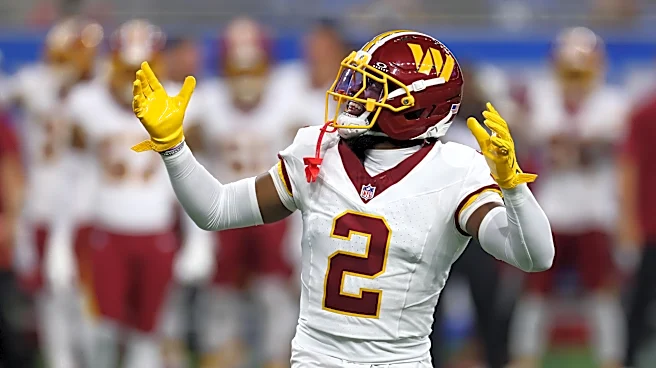
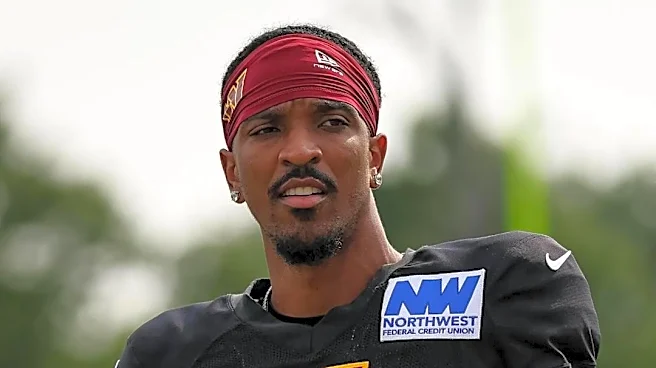
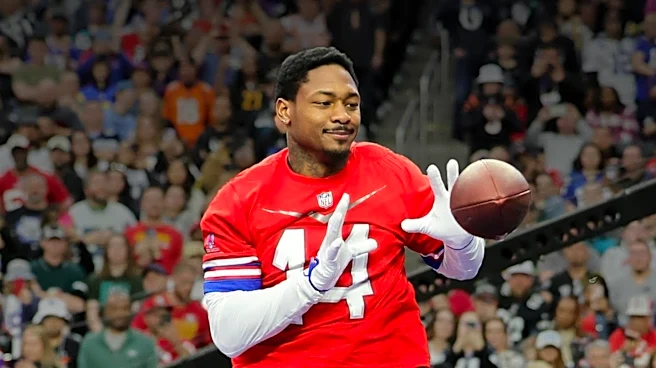
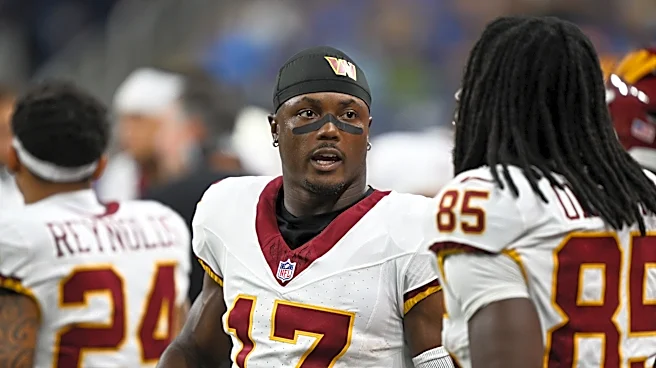
The Washington Commanders' decision to acquire All-Pro wide receiver Stefon Diggs has been met with criticism, with some labeling it an 'afterthought' in the team's strategy to support quarterback Jayden Daniels. Despite Diggs' proven track record, including
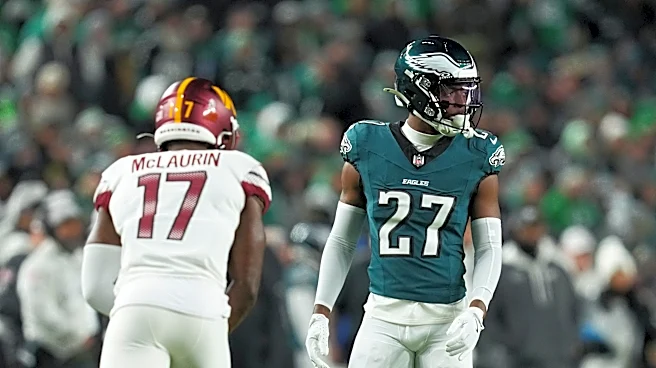
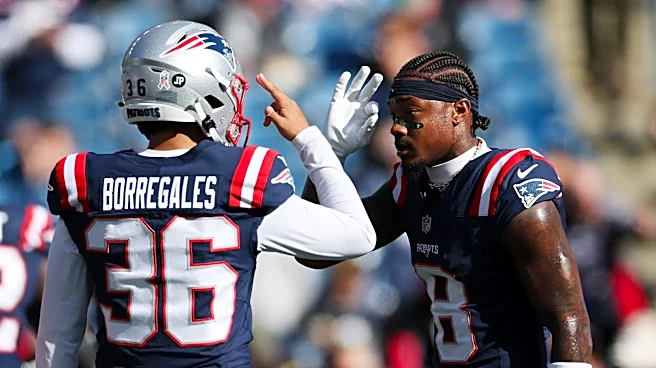
seven 1,000-yard seasons and a recent Super Bowl appearance with the New England Patriots, the move is being questioned by analysts like Henry McKenna of Fox Sports. McKenna suggests the acquisition felt like a last-minute decision, comparing it to buying a 'dusty bottle of red at the corner store.' This assessment comes even as Diggs is expected to significantly enhance the Commanders' receiving corps, playing alongside five-time 1,000-yard receiver Terry McLaurin. The concern is not about Diggs' individual talent, but rather the perceived lack of a cohesive plan around Daniels, particularly regarding offensive line support and the timing of other draft picks.
Why It's Important?
This situation highlights the critical importance of strategic roster construction in the NFL, especially when developing a new franchise quarterback. The criticism suggests that even a high-caliber player like Stefon Diggs might not fully address underlying team deficiencies if the overall strategy is perceived as disjointed. For the Commanders, the success or failure of this acquisition will heavily influence Jayden Daniels' development and the team's competitive standing. If Diggs can elevate the performance of other receivers and provide a reliable target for Daniels, it could mitigate some of the current concerns. Conversely, if the team struggles despite Diggs' presence, it could validate the 'afterthought' narrative and raise questions about the general manager's long-term vision. This scenario also underscores the pressure on NFL teams to not only acquire talent but also integrate it effectively into a comprehensive team-building plan.
What's Next?
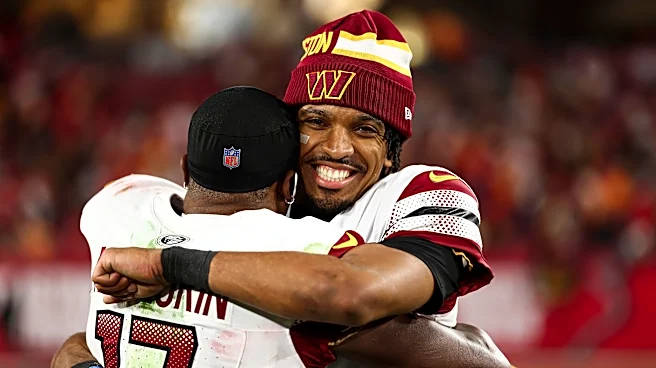
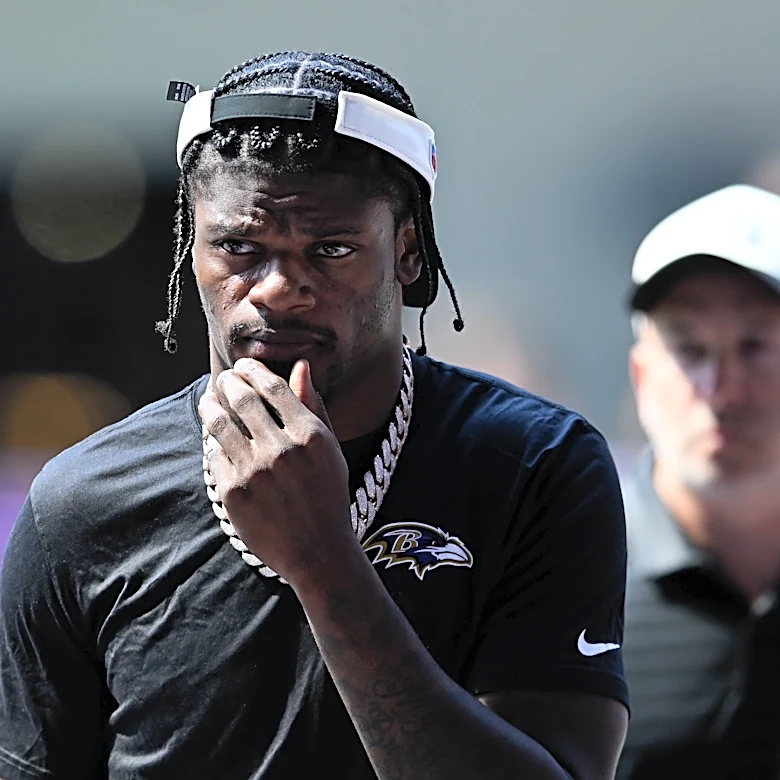
The immediate focus will be on how Stefon Diggs integrates into the Washington Commanders' offense and his on-field chemistry with quarterback Jayden Daniels, particularly as the NFL season approaches. Daniels has already expressed a positive impression of Diggs, highlighting his 'Football IQ,' competitiveness, and leadership in the locker room. This early endorsement suggests that Diggs could provide more than just receiving yards, potentially influencing the team's overall offensive culture. The performance of the offensive line, which has also drawn criticism, will be crucial in determining Daniels' ability to utilize Diggs and McLaurin effectively. As the season progresses, the Commanders' win-loss record and Daniels' statistical performance will be key indicators of whether the Diggs acquisition was a strategic success or merely a high-profile addition that failed to address deeper structural issues.
Beyond the Headlines
Beyond the immediate impact on the Commanders' performance, this situation touches upon the broader dynamics of player acquisitions in professional sports. It raises questions about the balance between acquiring star talent and building a cohesive team through strategic drafting and development. The 'afterthought' label, while critical, also reflects the high expectations placed on NFL franchises to meticulously plan their roster moves. For veteran players like Diggs, moving to a new team, especially one with a developing quarterback, presents both an opportunity to prove their continued value and a challenge to adapt to a new system and locker room environment. The narrative surrounding Diggs' arrival could also influence future free agency decisions, as players might consider not just the financial offer but also the perceived strategic coherence of a potential new team.