
What's Happening?
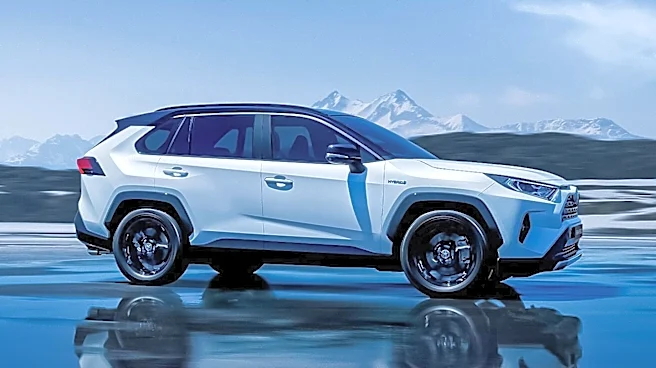
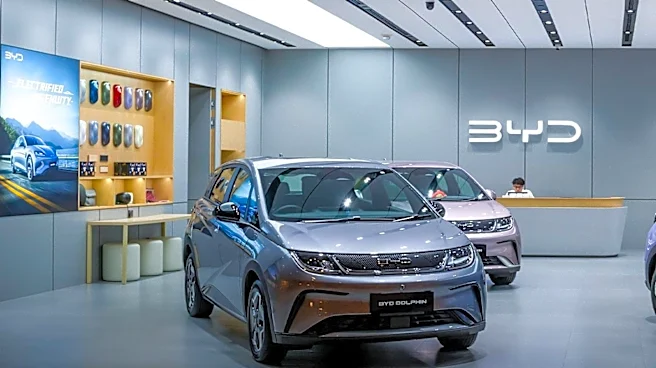
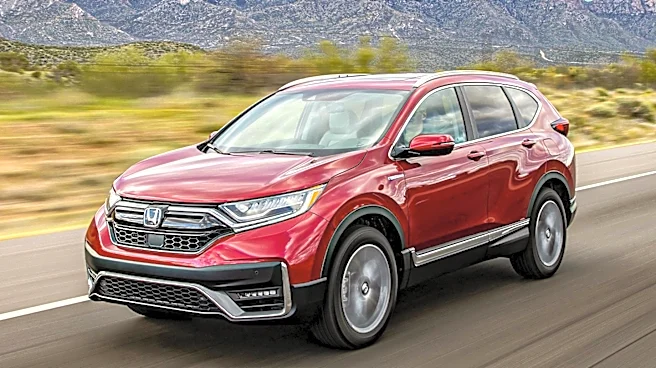
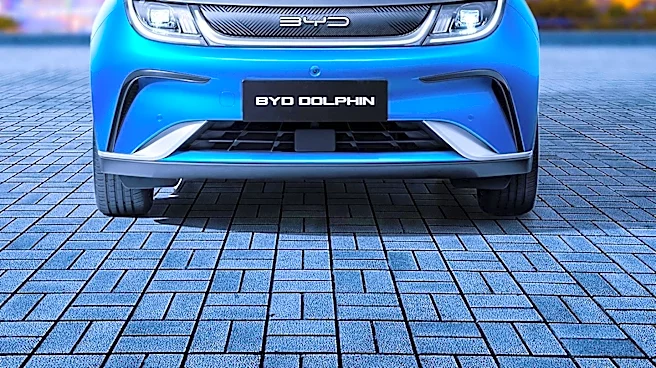
BYD, a Chinese new energy vehicle manufacturer, significantly expanded its presence in the Indonesian automotive market by 2025, achieving the largest sales share among new entrants. The company climbed
to third place in terms of passenger car sales volume, marking a substantial shift from the market's previous dominance by legacy OEMs like Toyota, Honda, and Suzuki. BYD's success is particularly notable in the electric vehicle (EV) segment, where its Atto 1 model became the first fully electric vehicle to rank among the top 10 best-selling passenger cars, securing an 8th position with a 3.7% market share. Another BYD model, the M6, also entered the top 20, making BYD the only brand with two fully electric models among the top sellers. Overall, Chinese manufacturers, led by BYD Auto with a 38.8% cumulative market share, accounted for nearly two-thirds of all EV sales in Indonesia between 2020 and 2025.
Why It's Important?
BYD's rapid ascent in the Indonesian market by 2025 highlights a significant global trend: the increasing influence of Chinese EV manufacturers in international markets. This development challenges the long-standing dominance of traditional Japanese and other legacy automakers, demonstrating a shift in consumer preferences and technological leadership in the electric vehicle sector. For the U.S. automotive industry, this trend signals intensified competition and the need for accelerated innovation in EV technology and market penetration strategies. The success of BYD in a key Southeast Asian market like Indonesia could serve as a blueprint for its expansion into other regions, potentially impacting global supply chains, manufacturing investments, and the competitive landscape for EV components and batteries. U.S. companies, both established and emerging, will need to closely monitor these shifts to remain competitive and adapt to evolving market dynamics.
What's Next?
The continued growth of BYD and other Chinese EV manufacturers in markets like Indonesia suggests a future where these companies will play an even more prominent role in the global automotive industry. This could lead to increased investment in EV infrastructure and manufacturing capabilities in Southeast Asia and other emerging markets. Traditional automakers, particularly those with a strong presence in these regions, may respond by accelerating their own EV development and deployment, potentially through strategic partnerships or increased localization of production. The competitive pressure from BYD's success could also drive down EV prices, making electric vehicles more accessible to a broader consumer base globally. Furthermore, the focus on new energy vehicles by companies like BYD will likely spur further innovation in battery technology and charging solutions, influencing the direction of the entire EV ecosystem.
Beyond the Headlines
The rise of BYD in Indonesia extends beyond mere sales figures; it represents a broader geopolitical and economic shift. China's strategic focus on new energy vehicles has positioned its companies to become global leaders in this critical sector, potentially reshaping international trade balances and technological dependencies. This development could have long-term implications for energy security, as countries increasingly transition away from fossil fuels. The success of BYD also underscores the importance of government policies and incentives in fostering the adoption of EVs and supporting domestic industries. For the U.S., this trend highlights the imperative to invest in domestic EV manufacturing and research to maintain technological competitiveness and reduce reliance on foreign supply chains, particularly in critical areas like battery production.