







What's Happening?
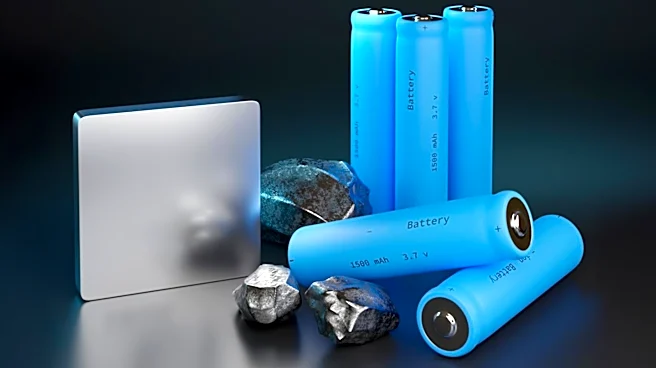
Researchers at the University of Cambridge have developed a novel method to extend the lifespan of lithium-ion batteries used in electric vehicles (EVs) by applying optimal physical pressure. This approach, which focuses on the mechanical dynamics of battery
cells, has the potential to double the operational life of these batteries. The research team, led by Professor Michael De Volder, utilized a custom experimental setup to apply precise pneumatic pressure to battery cells, significantly reducing mechanical stress and degradation. This breakthrough could lead to more durable and environmentally friendly EV batteries.
Why It's Important?
The discovery of a pressure-based method to extend battery life is significant for the EV industry, which faces challenges related to battery degradation and environmental impact. By potentially doubling battery lifespan, this technique could reduce the frequency of battery replacements, lower the demand for raw materials like nickel and cobalt, and decrease the environmental footprint of battery production. This innovation aligns with the growing emphasis on sustainability in the automotive sector and could enhance the economic viability of EVs by improving battery performance and reducing costs associated with battery disposal and recycling.
What's Next?
While the research is still in its early stages, the University of Cambridge has filed patents to protect the technology, indicating plans for future commercialization. The next steps involve scaling the laboratory setup to commercial battery packs capable of withstanding real-world conditions. If successful, this method could be integrated into existing EV production lines, offering a scalable solution to battery longevity challenges. The research has garnered support from prestigious organizations, suggesting potential for further development and industry adoption.