


What's Happening?
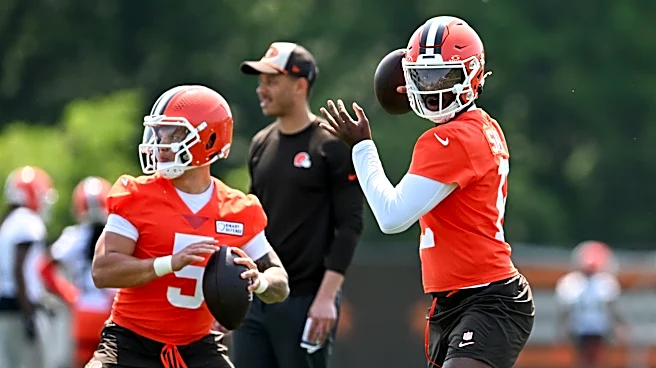
The Cleveland Browns are reportedly considering trading quarterback Shedeur Sanders, potentially for less than a fifth-round pick, as General Manager Andrew Berry looks to manage a crowded quarterback room. According to ESPN Cleveland's Tony Grossi, finding
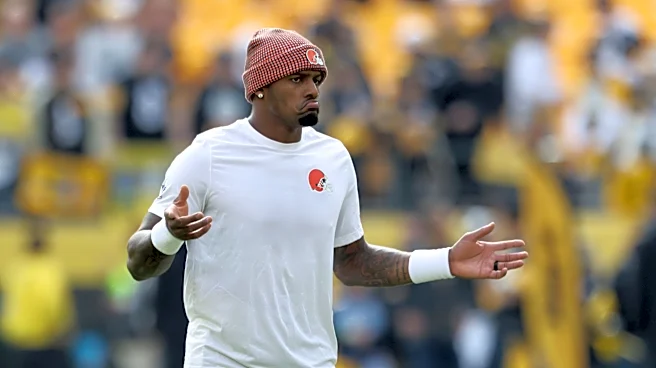
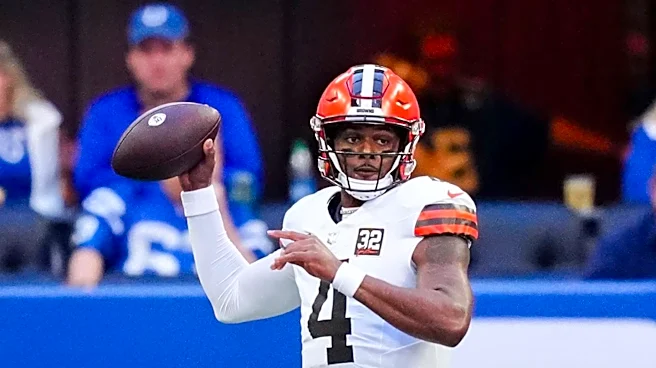
a team willing to offer even a fifth-round pick for Sanders, a 2025 fifth-round selection, might be challenging due to his limited playing time this season. Sanders has attempted only three passes in eight games after starting seven games as a rookie. The Browns currently have four quarterbacks on their roster, including Deshaun Watson, Dillon Gabriel, and Taylen Green, and are expected to target a quarterback early in the 2027 NFL Draft.
Why It's Important?
The potential trade of Shedeur Sanders, especially for a low return, signifies a strategic shift for the Cleveland Browns in managing their quarterback assets. It indicates that the team may prioritize future draft capital and roster flexibility over retaining a developmental quarterback who has seen minimal on-field action. For Sanders, a trade could offer a fresh start and potentially more playing time with another team, or it could further diminish his value if he remains on the bench. This decision reflects the high-stakes nature of NFL roster management, where teams constantly evaluate talent, future needs, and the efficient use of resources. It also highlights the challenges for backup quarterbacks to prove their worth when opportunities are scarce, impacting their trade value and long-term career prospects.
What's Next?
The Browns face a decision regarding Sanders before the November 10 trade deadline. If they proceed with a trade, they will likely seek the best available draft compensation, even if it's a modest return. If Sanders remains with the team, his role as a backup will likely continue to be limited, especially with Deshaun Watson as the starter and Dillon Gabriel also on the roster. The team's expected pursuit of a quarterback in the 2027 NFL Draft further suggests that Sanders' long-term future in Cleveland is uncertain. The immediate focus will be on how the Browns navigate the trade deadline and whether they prioritize immediate roster adjustments or future draft capital.
Beyond the Headlines
This situation underscores the brutal reality of quarterback development and roster construction in the NFL. Teams invest significant resources in drafting quarterbacks, but playing time and opportunities are often limited, especially for those not immediately projected as starters. The 'quarterback carousel' often leaves many talented players without a clear path to consistent playing time, impacting their ability to develop and showcase their skills. The Browns' willingness to trade Sanders for a low return, despite his draft position, reflects a pragmatic approach to roster management, prioritizing flexibility and future planning over holding onto a player who may not fit their long-term vision. This trend can lead to a more fluid market for backup quarterbacks, with teams constantly evaluating and trading players to optimize their roster spots.