





What's Happening?
The World Gold Council has released its 'Gold Mid-Year Outlook 2026: Point Break' report, emphasizing the sensitivity of gold prices to macroeconomic conditions, geopolitical risks, and investor sentiment. The report, authored by Juan Carlos Artigas,
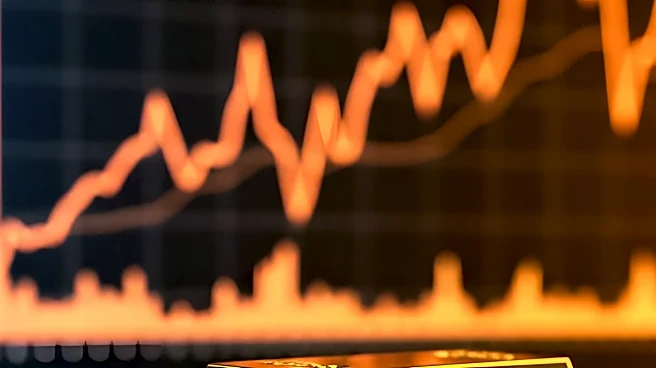
Taylor Burnette, and Dr. Fergus O’Connor, notes that gold prices reached record highs in January 2026, surpassing $5,500 per ounce, before declining to below $4,000 per ounce by late June. Despite a 7% decrease since January, gold remains one of the top-performing commodities over the past year. The report suggests that gold prices are currently aligned with a global backdrop of moderate growth and elevated inflation, with expectations of limited central bank tightening. The authors highlight potential catalysts for a price increase, such as economic downturns, geopolitical shocks, and shifts in interest rate expectations.
Why It's Important?
The fluctuations in gold prices have significant implications for investors and economies worldwide. As a traditional safe-haven asset, gold's performance is closely watched by investors seeking to hedge against economic uncertainty and inflation. The report's findings suggest that while gold prices have dipped, the potential for a rebound remains, particularly if economic or geopolitical conditions worsen. This could impact investment strategies and influence central bank policies, especially in countries with significant gold reserves. Additionally, the report underscores the growing influence of Asian demand on gold prices, highlighting the region's role in shaping global commodity markets.
What's Next?
The report indicates that gold prices could resume an upward trend if clear economic or geopolitical signals emerge. Investors and policymakers will likely monitor developments closely, as any significant changes could prompt shifts in investment strategies and central bank policies. The potential for renewed geopolitical tensions or economic downturns could serve as catalysts for a price increase, while factors such as a strong dollar or rising interest rates could pose challenges. The ongoing demand from central banks and policy shifts in key markets like India will also play a crucial role in determining the future trajectory of gold prices.