






What's Happening?
Plantd, a North Carolina-based company known for manufacturing construction panels from grass, has launched a new biochar product line. This initiative transforms biomass waste from its panel production into a soil amendment for the agricultural industry.
Previously, Plantd faced monthly waste-removal costs of $13,000 due to leftover biomass. CEO Nathan Silvernail identified biochar as a solution, turning a liability into a substantial new revenue stream. The company's biochar is produced by heating biomass to extreme temperatures in the absence of oxygen, converting CO2 into durable carbon. Plantd's biochar is noted for its high silica content, which has shown promise in improving crop disease resistance, water retention, soil structure, and naturally raising soil pH. Plantd is collaborating with agricultural solutions provider Qualterra for biomass processing and has already established an initial customer base for the product.
Why It's Important?
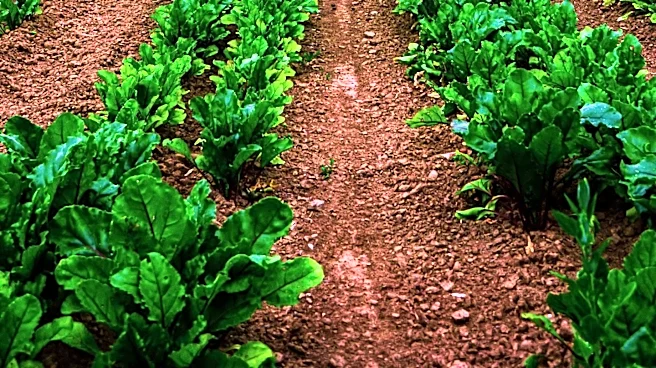
This development is significant for U.S. agriculture and sustainable manufacturing practices. Plantd's biochar offers farmers a way to reduce fertilizer usage, improve soil composition, and potentially sequester carbon, contributing to more sustainable farming. The product's high silica content provides additional benefits, such as enhanced crop health and resilience. For the construction industry, Plantd's primary business of producing structural panels from grass offers an alternative to traditional wood-based materials, promoting resource efficiency and reducing reliance on timber. The company's closed-loop manufacturing model, where waste is converted into a valuable product, sets a precedent for industrial sustainability. This innovation can lead to economic benefits by creating new markets for agricultural byproducts and reducing waste disposal costs, while also addressing environmental concerns related to soil degradation and carbon emissions.
What's Next?
Plantd plans to further integrate its biochar production into a fully closed-loop manufacturing system. While currently selling biochar to the agricultural industry, the company intends to use a portion of its biochar as an energy source for its own manufacturing operations. Plantd's all-electric construction panel machine currently runs on grid power, but future plans include transitioning to solar and wind power, with the gasification process of biomass into biochar serving as another potential energy source. This integration would further reduce operational costs and enhance the company's sustainability profile. Plantd will continue to work with Qualterra to expand its biochar production and customer base, while also exploring the potential for carbon credit strategies due to the long-term carbon storage capabilities of its biochar.
Beyond the Headlines
Plantd's innovative approach to waste management and resource utilization highlights a growing trend towards circular economy principles in U.S. industries. By transforming a waste product into a revenue-generating asset, Plantd demonstrates how sustainability can be economically viable. The company's background, with CEO Nathan Silvernail's experience at SpaceX, underscores how principles of efficiency and mass minimization from other high-tech sectors can be applied to traditional industries like manufacturing and agriculture. This model could inspire other companies to re-evaluate their waste streams and explore similar conversion opportunities, fostering a more resource-efficient industrial landscape. The use of biochar also has broader implications for climate change mitigation, as it offers a method for long-term carbon sequestration in soils, contributing to natural climate solutions. This initiative represents a tangible step towards a more sustainable and resilient U.S. economy.