







What's Happening?
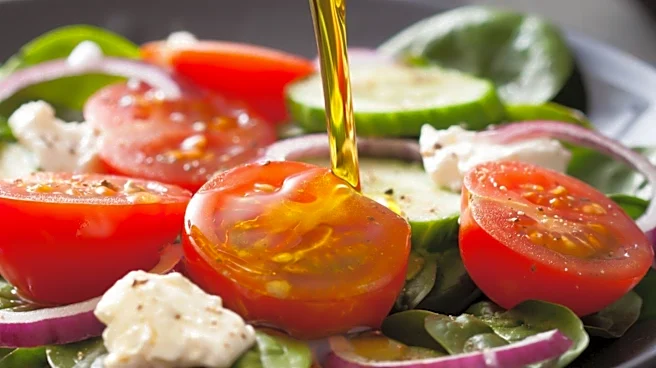
The Mediterranean diet, renowned for its health benefits, prominently features extra virgin olive oil, which is linked to healthier aging, improved heart health, and reduced risk of chronic diseases. Rich in monounsaturated fats and antioxidant polyphenols,
olive oil is praised for its ability to balance cholesterol levels and lower blood pressure. Sarah Fulton Vachon, an olive oil sommelier, advocates for treating olive oil as a central ingredient rather than a mere condiment. Her cookbook, 'Drizzle,' showcases recipes that highlight the versatility of olive oil, including dishes like green gazpacho and stuffed peppers, emphasizing its role in a healthy diet.
Why It's Important?
The emphasis on olive oil within the Mediterranean diet underscores its potential as a key component in promoting long-term health and longevity. As dietary habits shift towards more plant-based and heart-healthy options, olive oil's role in reducing cardiovascular risks and supporting overall wellness becomes increasingly significant. This trend may influence dietary guidelines and consumer choices, encouraging the incorporation of olive oil into daily meals. The focus on olive oil also highlights the broader benefits of the Mediterranean diet, which could lead to increased adoption of this eating pattern in the U.S., potentially improving public health outcomes.
Beyond the Headlines
The cultural and culinary significance of olive oil extends beyond its health benefits, reflecting a deep-rooted tradition in Mediterranean cuisine. Its use in various dishes not only enhances flavor but also connects consumers to a rich heritage of food practices. As interest in sustainable and authentic food sources grows, olive oil's prominence may drive demand for high-quality, ethically produced products. This could lead to increased awareness and appreciation of traditional agricultural practices, supporting local economies and preserving cultural identities.