





What's Happening?
A source close to the production of A24’s film 'Primetime' has stated that Chris Hansen, the former host of 'To Catch a Predator,' was not asked to 'sign away' his rights in order to preview the movie. This contradicts Hansen's earlier claims on Fox News,
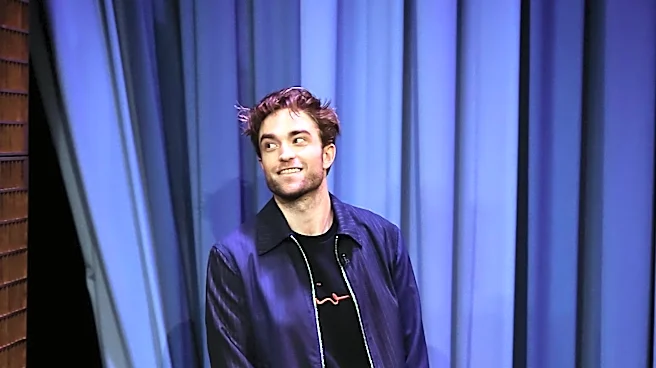
where he alleged that a 'very restrictive agreement' would have required him to relinquish rights to his name, image, and brand. According to the source, Hansen was presented with a standard non-disclosure agreement (NDA) that all preview audiences are required to sign a week in advance to prevent spoilers and protect the film's intellectual property. Hansen reportedly refused to sign this standard NDA, leading to him being denied a screening of the film, which stars Robert Pattinson as Hansen.
Why It's Important?
This clarification from a source close to 'Primetime' highlights a common point of contention in the entertainment industry regarding NDAs and the rights of individuals depicted in biographical works. The discrepancy between Hansen's account and the source's explanation underscores the differing interpretations of legal agreements and their implications. For film studios, standard NDAs are crucial for safeguarding unreleased content and maintaining control over intellectual property. However, for individuals whose lives are dramatized, concerns about personal rights and narrative control are paramount. This situation could influence how future biographical films manage previews and engage with their subjects, potentially leading to more explicit communication about NDA terms to avoid public misunderstandings and disputes.
What's Next?
With the film 'Primetime' set to premiere on September 25, Chris Hansen will likely have to wait until its general release to view the movie. The public disagreement over the NDA terms may continue to generate discussion, potentially affecting public perception of both Hansen and the film. This incident could also prompt a broader conversation within the entertainment industry about the transparency and fairness of NDAs, especially when dealing with real-life subjects. Studios might review their standard NDA practices to ensure clarity and mitigate potential public relations issues, while individuals portrayed in films may become more vigilant about the terms they are asked to sign.
Beyond the Headlines
The conflict surrounding Chris Hansen's attempt to preview 'Primetime' touches upon the ethical considerations of artistic interpretation versus personal rights. When a film dramatizes a real person's life, there's an inherent tension between the filmmakers' creative license and the subject's desire to control their own narrative and image. The differing accounts of the NDA highlight how legal documents can be perceived through various lenses—as standard procedure by one party and as an overreach by another. This situation raises questions about the responsibilities of creators to their subjects, particularly when the subject is a public figure whose identity is closely tied to the story being told. It also underscores the power dynamics at play, where a studio's need for secrecy can clash with an individual's right to review their portrayal, potentially influencing future industry standards for engaging with real-life subjects.