






What's Happening?
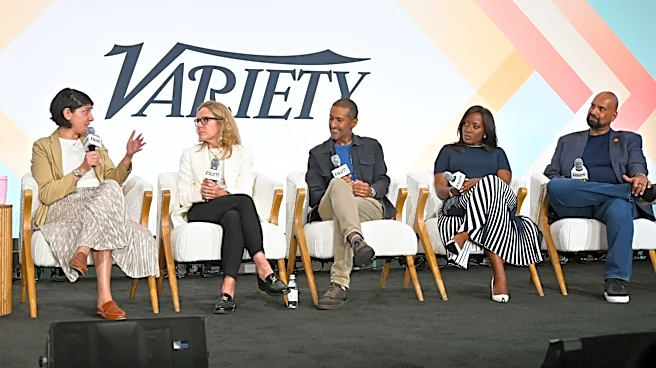
Netflix Chief Content Officer Bela Bajaria has dismissed the notion that young audiences exclusively prefer short-form content, directly challenging the perceived threat from platforms like YouTube. Bajaria emphasized that compelling long-form shows,
such as 'Wednesday' and 'Stranger Things,' continue to attract younger viewers. She outlined Netflix's strategic approach, which includes a disciplined investment in content, a willingness to adapt to evolving viewing habits, and an opportunistic stance on live programming and advertising. The company is focusing on events that generate cultural relevance and appointment viewing, including NFL games, boxing, and concerts, rather than pursuing every available rights package. This strategy aims to attract new subscribers and diverse audiences, who can then be retained by Netflix's extensive film and television library. Bajaria also indicated that Netflix remains open to partnerships with other media companies, provided the deal economics and strategic alignment are favorable.
Why It's Important?
This strategic outlook from Netflix's Chief Content Officer is significant for the U.S. entertainment industry and its economic stakeholders. By asserting that long-form content still holds sway with younger demographics, Netflix is signaling a continued commitment to its core model of high-quality, serialized programming, which differentiates it from short-form video platforms. The company's measured entry into live programming and advertising is crucial for its growth trajectory, as these areas offer new revenue streams and audience engagement opportunities. Success in attracting and retaining viewers through live events could significantly impact advertising markets and competition among streaming services. Furthermore, Netflix's openness to partnerships suggests potential shifts in content distribution and collaboration within the media landscape, which could lead to new business models and content offerings. The company's disciplined approach to its $20 billion content budget underscores a focus on profitability and sustainable growth in a highly competitive market.
What's Next?
Netflix is expected to continue its strategic investments in compelling global programming while selectively expanding its live content and advertising initiatives. The company will likely pursue more opportunistic deals for sports and other major events that align with its goal of cultural relevance and appointment viewing. Viewers can anticipate a mix of high-quality original series and films, alongside an increasing presence of live events. The success of these ventures will be closely watched by competitors and investors, as it could influence broader trends in the streaming industry. Potential partnerships with other media companies could lead to new content integrations or co-productions, further diversifying Netflix's offerings. The company's stock performance, which has shown some volatility, will be influenced by the effectiveness of these strategies in attracting and retaining subscribers and generating revenue.
Beyond the Headlines
The discussion around young audiences' viewing habits touches upon a deeper cultural shift in media consumption. While short-form content has undeniably gained traction, Netflix's stance suggests that the demand for immersive, narrative-driven experiences remains strong across all age groups. This highlights the enduring power of storytelling and the potential for different content formats to coexist rather than entirely displace one another. The strategic move into live events also reflects a broader trend of streaming services seeking to replicate the 'appointment viewing' experience once dominated by traditional television, aiming to foster a sense of community and real-time engagement. This evolution could redefine how audiences interact with content and how media companies monetize their offerings, blurring the lines between traditional broadcasting and on-demand streaming. The emphasis on financial discipline within a massive content budget also points to the increasing pressure on streaming services to achieve profitability amidst intense competition.