
What's Happening?
Gunnison Copper has received pre-clearance for a proposed listing on the NYSE American under the ticker symbol GUNN, with trading anticipated to commence in late October. The company plans to establish
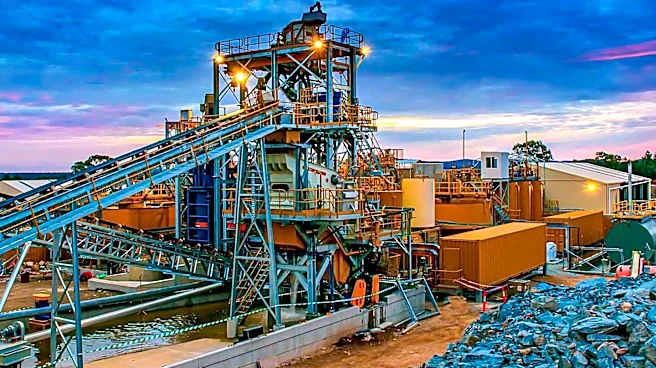
a Level II American Depositary Receipt (ADR) program, where each ADR will represent 35 common shares, providing U.S. investors with access to a U.S. dollar-denominated security. This proposed listing is contingent upon the Securities and Exchange Commission (SEC) registration becoming effective and receiving final listing approvals. Gunnison's common shares will continue to trade on the TSX under the symbol GCU. CEO Craig Hallworth stated that this move aims to expand the company's role in domestic copper supply chains, emphasizing copper's connection to key U.S. investment themes such as artificial intelligence, electrification, and national defense. Gunnison operates the Johnson Camp Mine in Arizona, which has an annual nameplate capacity of up to 25 million pounds of finished copper cathode. Its separate Gunnison Copper Project could offer a larger production base, with a March preliminary economic assessment estimating an average annual output of 174 million pounds during the first 15 years, though these projections are subject to development.
Why It's Important?
Gunnison Copper's pursuit of a NYSE American listing is a significant development for the U.S. copper supply chain and the broader U.S. economy. By seeking to expand its role in domestic copper production, Gunnison Copper directly addresses the increasing demand for critical minerals driven by electrification, artificial intelligence, and national defense initiatives. This move could enhance the security and stability of the U.S. copper supply, reducing reliance on foreign sources and supporting domestic manufacturing and technological advancements. For U.S. investors, the ADR program offers a new avenue to invest in a company directly contributing to these strategic sectors. The potential for increased domestic copper production could also create jobs and stimulate economic activity in regions like Arizona, where Gunnison operates. Furthermore, the emphasis on copper's role in AI and electrification highlights the growing intersection of traditional mining with cutting-edge technology, underscoring the importance of raw materials in the digital age.
What's Next?
The immediate next step for Gunnison Copper is to await the effectiveness of its SEC registration and secure final listing approvals for the NYSE American. If successful, trading under the ticker GUNN is targeted for late October. The company's common shares will continue to trade on the TSX under GCU. Gunnison will also continue to develop its larger Gunnison Copper Project, which, if developed, could significantly increase its production capacity. The company's strategic focus will likely remain on expanding its domestic copper supply capabilities to meet the growing demands of U.S. industries. This listing could also pave the way for further capital raises to fund exploration and development activities, potentially attracting more U.S. institutional and retail investors interested in the critical minerals sector.
Beyond the Headlines
The strategic importance of copper, as highlighted by Gunnison Copper's CEO, extends beyond its traditional industrial uses to become a foundational element for emerging technologies and national security. The connection between copper and artificial intelligence, electrification, and national defense underscores a broader geopolitical and economic trend where access to critical minerals is becoming a key determinant of national competitiveness and security. This development could prompt greater U.S. government and private sector investment in domestic mining and processing capabilities for other critical minerals. The move also reflects a growing awareness of supply chain vulnerabilities and the imperative to build resilient domestic sources for essential raw materials. This shift could lead to policy changes aimed at incentivizing domestic mineral production and processing, potentially reshaping the U.S. mining landscape and its role in global supply chains.