






What's Happening?
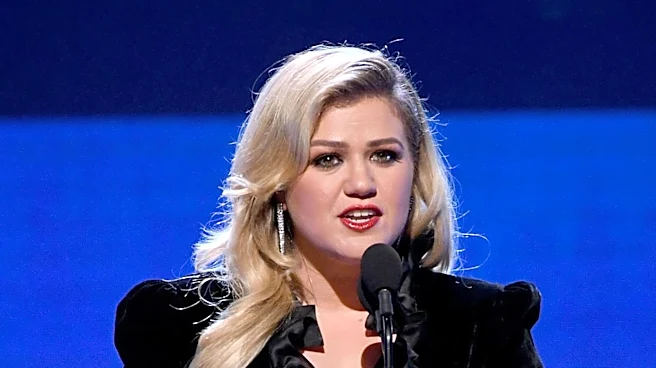
Kelly Clarkson, the acclaimed singer and coach on 'The Voice,' has shared insights into her progressive parenting philosophy. During a recent interview, Clarkson explained that she avoids an 'I told you so' approach with her two children, River, 12, and Remington,
10. Instead of demanding absolute obedience, she encourages them to learn from their own experiences and mistakes. Clarkson noted that her children have occasionally come to her acknowledging that they should have followed her advice, which she sees as a positive outcome of her method. She believes this fosters mutual trust within their household. Her children have grown up in the public eye, with Remington being a toddler when she first joined 'The Voice' coaching panel. Clarkson emphasizes allowing her children to navigate life organically, particularly during challenging ages like junior high, where peer arguments and shifting friendships are common.
Why It's Important?
Clarkson's parenting approach highlights a growing trend in modern child-rearing that prioritizes emotional intelligence and independent problem-solving over authoritarian control. This method can significantly impact children's development, potentially leading to greater self-reliance, improved decision-making skills, and stronger parent-child relationships built on trust rather than fear. For public figures like Clarkson, openly discussing such personal choices can influence a broader audience of parents, offering alternative perspectives on navigating the complexities of raising children in a rapidly changing world. Her emphasis on allowing children to make mistakes and learn from them can reduce parental guilt and anxiety, promoting a healthier family dynamic. This approach also reflects a societal shift towards valuing individual growth and resilience from a young age.
Beyond the Headlines
The 'I told you so' dynamic in parenting often stems from a desire to protect children from harm or failure, but it can inadvertently stifle their autonomy and critical thinking. Clarkson's method, by contrast, encourages children to internalize lessons through direct experience, which can be more effective for long-term behavioral change and personal development. This philosophy extends beyond the family unit, reflecting broader discussions in education and psychology about the benefits of experiential learning and fostering intrinsic motivation. By allowing children to face natural consequences in a supportive environment, parents can help them develop a robust sense of self-efficacy and the ability to navigate future challenges independently. This approach also subtly challenges traditional parenting norms that might inadvertently promote dependency or a fear of failure.