
What's Happening?
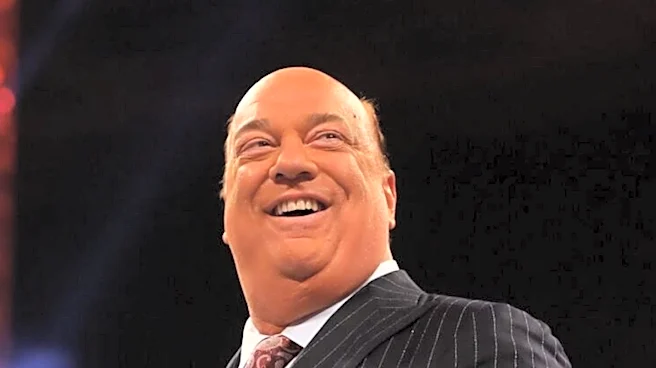
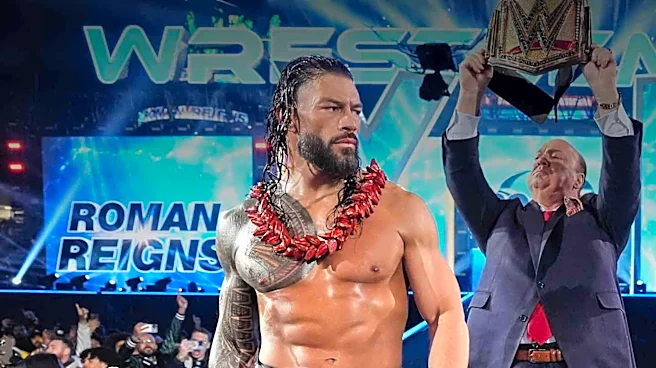
WWE Hall of Famer Eric Bischoff has voiced criticism regarding Paul Heyman's recent disclosure of his methods for helping Roman Reigns develop his character. On The Undertaker’s Six Feet Under Podcast, Heyman detailed how he would call Reigns unannounced
and remain in character for extended periods to deepen Reigns' understanding of his persona. While Bischoff acknowledged that Heyman's techniques effectively taught Reigns a form of method acting, elevating him beyond a typical wrestler, he believes that revealing these behind-the-scenes details was detrimental. Bischoff argued that such revelations strip away the mystery and aura surrounding a wrestling character, which he considers essential for maintaining fan engagement and curiosity. He compared Reigns' commitment to his character to that of legends like Hulk Hogan, Ric Flair, and Stone Cold Steve Austin, who fully embodied their roles.
Why It's Important?
This discussion highlights a fundamental debate within professional wrestling about the balance between transparency and maintaining kayfabe (the illusion of reality within the sport). For fans, the mystique of a character often contributes significantly to their appeal and the overall entertainment value. When the creative process is exposed, it can diminish the perceived authenticity and impact of a performer. For WWE, a company that thrives on storytelling and character development, managing how much information is shared with the public is crucial. Bischoff's comments suggest that revealing the 'how' behind a character's success can inadvertently undermine the 'what' that fans invest in. This could influence how performers and their managers choose to discuss their craft publicly, potentially leading to more guarded statements to preserve the magic of their on-screen personas.
What's Next?
The wrestling community may continue to debate the merits of revealing character development processes. While some might agree with Bischoff that mystery is vital, others might argue that such insights offer a deeper appreciation for the performers' dedication. Paul Heyman and Roman Reigns are unlikely to directly address Bischoff's comments, as their focus remains on their on-screen roles and storylines within WWE. However, this discussion could subtly influence future interviews or documentaries related to character building in wrestling, with a potential shift towards more generalized discussions rather than specific, detailed methods. Performers and management might become more cautious about sharing the intricate details of their character work to preserve the 'aura' that Bischoff emphasizes as crucial for long-term success and fan engagement.
Beyond the Headlines
The broader implication of Bischoff's critique touches upon the nature of performance art and audience perception. In many forms of entertainment, the 'magic' is often preserved by keeping the creative process hidden. For professional wrestling, which blurs the lines between sport and theatrical performance, this is particularly salient. The revelation of method acting techniques, while demonstrating the professionalism and dedication of performers like Roman Reigns, can inadvertently shift audience perception from viewing a character as an organic entity to a carefully constructed role. This raises questions about the future of wrestling's narrative presentation: will increased transparency about character development lead to a more sophisticated, appreciative audience, or will it erode the suspension of disbelief that is so vital to the industry's appeal? The tension between revealing the craft and preserving the illusion remains a core challenge for wrestling's evolution.