
What's Happening?
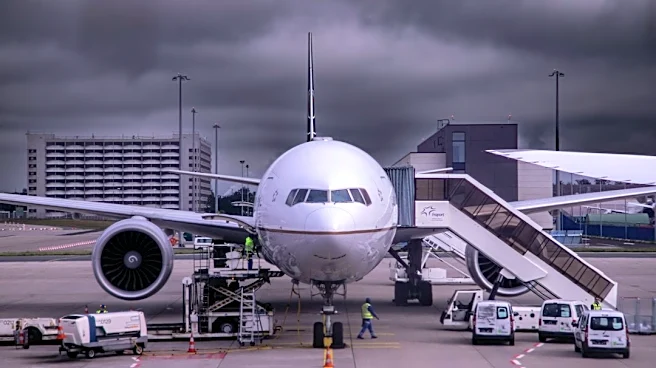
Jenni 'JWoww' Farley, a star from 'Jersey Shore: Family Vacation,' has publicly criticized United Airlines and the broader airline industry over what she describes as 'insane' flight prices and excessive
add-on fees. In an expletive-filled rant on TikTok, Farley detailed her experience attempting to book a flight from Newark, New Jersey, to Miami. She noted that a first-class roundtrip ticket for two cost nearly $4,000, while economy tickets were approximately $800 per person each way, totaling around $3,200. Her primary frustration stemmed from an additional $55 per person, per ticket charge just to select seats next to her husband, despite having already paid for first-class. Farley highlighted that these costs have significantly increased since 2020, arguing that airlines are exhibiting 'greed' by imposing such charges for basic services like seat selection. She also expressed her desire for a 'nonprofit airline' to ensure fair and comfortable travel for everyday Americans.
Why It's Important?
Farley's public outcry reflects a growing sentiment among consumers regarding the rising costs and perceived nickel-and-diming practices within the airline industry. This issue is particularly relevant to U.S. travelers who have seen airfares and ancillary fees climb significantly in recent years. The practice of charging for seat selection, even in premium classes, has become a contentious point, impacting family travel and passenger comfort. For airlines, these fees represent a substantial revenue stream, but they risk alienating customers and fostering negative public relations. The broader economic impact includes reduced travel affordability for many Americans, potentially affecting tourism and business travel. The debate over airline pricing transparency and fairness continues to be a significant concern for both consumers and regulatory bodies, as it touches upon consumer rights and the competitive landscape of the travel sector.
What's Next?
The public discourse initiated by figures like Jenni Farley could intensify pressure on airlines to re-evaluate their pricing strategies and fee structures. While immediate policy changes are unlikely, increased consumer complaints and media attention might prompt closer scrutiny from consumer advocacy groups and potentially lead to calls for regulatory intervention. Airlines may face continued public relations challenges if they do not address these concerns, potentially impacting their brand loyalty and market share. Travelers, in the interim, will likely continue to navigate complex pricing models, often resorting to third-party booking sites or loyalty programs to mitigate costs. The conversation also highlights the ongoing tension between airline profitability and consumer expectations for affordable and transparent travel.
Beyond the Headlines
The 'insane' flight prices and add-on fees discussed by Jenni Farley point to a deeper issue within the service industry: the unbundling of services. What were once standard inclusions in a ticket price—like choosing a seat—are now often presented as optional extras. This trend, while maximizing revenue for companies, shifts the burden of cost and convenience onto the consumer. It raises ethical questions about what constitutes a 'fair' price for a service and whether consumers are adequately informed about the true cost of their travel upfront. This model can disproportionately affect lower-income travelers and families, making travel less accessible. The broader implication is a potential erosion of trust between service providers and consumers, as the perception of 'greed' can overshadow the value proposition of the service itself. This phenomenon is not unique to airlines but is increasingly prevalent across various sectors, prompting a re-evaluation of consumer protection and fair business practices.