




What's Happening?
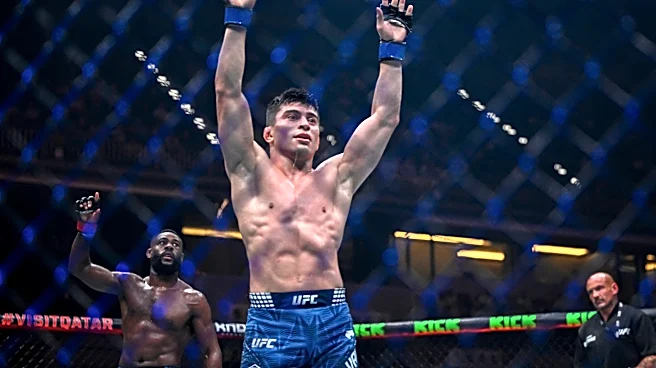
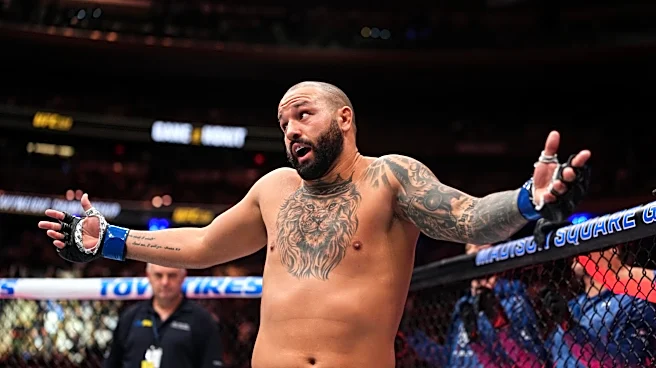
Stephen 'Wonderboy' Thompson, a former welterweight title challenger, has confirmed his retirement from mixed martial arts following his 'epic' final fight at UFC 334. Thompson secured a brutal knockout victory against Charles Radtke with a signature
spinning heel kick in the third round. He described the finish as cinematic and unexpected, having planned the move after noticing Radtke slowing down. Despite the spectacular end to his career, Thompson stated that his retirement is definitive, emphasizing that fighting is not his sole identity. He highlighted his commitment to his martial arts school, Upstate Karate, and his family, particularly the recent birth of his daughter, as reasons for staying retired.
Why It's Important?
Thompson's retirement marks the departure of a significant figure from the U.S. mixed martial arts scene, impacting the welterweight division and the UFC's roster. His decision, made on his own terms with a highlight-reel finish, sets a precedent for athletes seeking to transition out of professional sports gracefully. This event is important for the sports industry as it highlights the challenges athletes face in retirement, particularly those whose identities are deeply intertwined with their sport. Thompson's emphasis on his life outside the octagon, including his family and martial arts school, provides a positive example of a successful post-fighting career, potentially influencing other athletes to plan for life beyond competition. It also affects the UFC's marketing and fan engagement, as a popular fighter exits the active roster.
What's Next?
Thompson will now focus on his role at Upstate Karate, teaching and mentoring the next generation of martial artists in South Carolina. His retirement will open up opportunities for other fighters in the welterweight division to climb the ranks. The UFC will continue to promote its current roster and develop new talent to fill the void left by veteran fighters like Thompson. While some fans may hope for a return, Thompson's firm stance suggests he will remain committed to his decision, focusing on his family and martial arts school. His legacy in the sport will likely be celebrated through retrospectives and discussions about his unique striking style and sportsmanship.
Beyond the Headlines
Thompson's retirement narrative delves into the deeper psychological aspects of an athlete's identity and the transition from a high-stakes professional career. His assertion that 'the fight game is not my identity' challenges the common perception that athletes are solely defined by their sport. This perspective offers a valuable lesson on the importance of developing a multifaceted identity and having a strong support system outside of one's profession. It also touches upon the emotional toll of professional sports, particularly the sacrifices made by athletes and their families. Thompson's decision to prioritize his family and community work over a potential return to the octagon speaks to a broader shift in how athletes view their careers and personal well-being, moving beyond the singular pursuit of athletic glory.