

What's Happening?
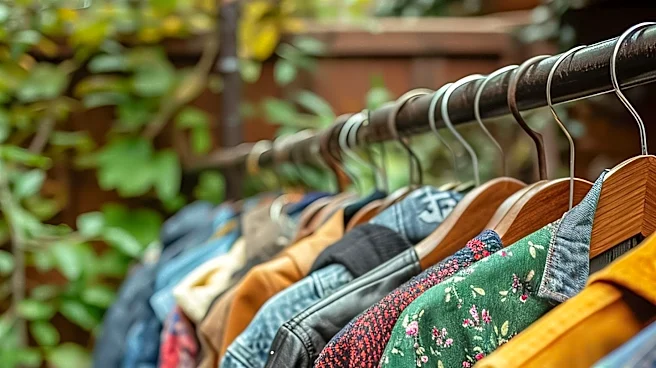
Mosey, a sustainable kids' fashion collective in Philadelphia, is actively working to keep children's apparel in circulation through grassroots clothing swaps and pop-up shopping events. By partnering with local businesses, Mosey creates community spaces
where families can exchange gently used garments, often while enjoying refreshments. These events are designed to promote sustainability and circular fashion, offering a practical and environmentally conscious way for families to manage their children's rapidly changing wardrobes. In addition to clothing swaps, Mosey organizes pop-up markets that feature local artisans, providing a platform for discovery and community engagement across Philadelphia.
Why It's Important?
Mosey's initiative in Philadelphia addresses a significant aspect of the U.S. fashion industry's waste problem, specifically concerning children's clothing, which often has a very short lifespan. By facilitating clothing swaps, Mosey directly combats the 'take-make-dispose' linear model of consumption, promoting reuse and extending the life cycle of garments. This not only reduces textile waste in landfills but also offers an affordable and sustainable solution for families, particularly in urban areas. The collective's focus on community engagement and supporting local artisans also strengthens local economies and fosters a sense of shared responsibility for environmental stewardship. This model could serve as a blueprint for other U.S. cities looking to implement practical, community-based circular fashion solutions.
What's Next?
Mosey will likely continue to expand its network of local business partnerships and community event locations throughout Philadelphia. The collective's success in organizing clothing swaps and pop-up markets suggests a growing demand for sustainable and community-oriented fashion solutions. Future plans may include increasing the frequency of events, diversifying the types of items exchanged, or developing educational programs to further promote circular fashion principles among families. The model's grassroots nature indicates potential for replication in other neighborhoods or cities, driven by local demand and community organizers seeking to reduce waste and support sustainable living.
Beyond the Headlines
Mosey's work goes beyond simply exchanging clothes; it cultivates a culture of sharing, resourcefulness, and community resilience. In an era dominated by fast fashion and consumerism, these initiatives encourage a more mindful approach to consumption and highlight the value of pre-owned items. The events also serve as social hubs, fostering connections among community members and supporting local businesses. This collective action demonstrates how small-scale, local efforts can contribute significantly to broader sustainability goals, challenging the notion that environmental solutions must always come from large corporations or government mandates. It underscores the power of community-led initiatives in driving behavioral change and building a more sustainable future.