




What's Happening?
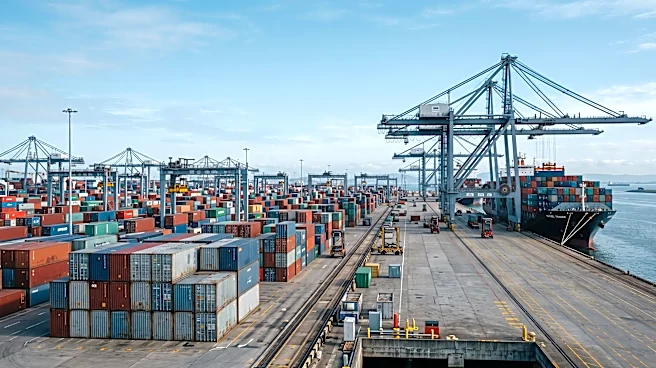
Hutchison Ports, a subsidiary of Hong Kong-listed CK Hutchison Holdings, is a global leader in investing, developing, and operating container terminals and other transport infrastructure. The company's operations span 53 ports with 295 operational berths
across 24 countries, handling 90.1 million twenty-foot equivalent units (TEU) in 2025. While Hutchison Ports serves trade lanes connected to the United States, particularly through Mexico and the Bahamas, its network map does not list any terminals directly within the U.S. The company's Americas portfolio is concentrated in Mexico (Ensenada, Veracruz, Lazaro Cardenas, Manzanillo) and Freeport, Bahamas, which acts as a transshipment hub for the U.S. eastern seaboard. A significant development occurred in February 2026 when the Panamanian state took administrative and operational control of the Balboa and Cristobal terminals, previously operated by Hutchison Ports through Panama Ports Company. CK Hutchison disputes this takeover and initiated investment-treaty arbitration against Panama, seeking over $1.5 billion in damages.
Why It's Important?
Hutchison Ports' extensive global footprint highlights its critical role in international supply chains, connecting ocean shipping with trucking, rail, warehousing, and customs processes. The absence of direct U.S. terminal operations means that while U.S. consumers and businesses benefit from the efficiency of Hutchison Ports' network, particularly through its Mexican and Bahamian hubs, there is no direct U.S. employment base within the company. This indirect influence on U.S. supply chains underscores the interconnectedness of global logistics. The dispute with Panama is particularly significant, illustrating the political, concession, regulatory, and sovereign risks that port businesses face. A $1.5 billion arbitration claim against a sovereign state can have substantial financial implications for CK Hutchison and sets a precedent for international investment disputes in critical infrastructure sectors. This situation also emphasizes the complexities and potential vulnerabilities in global port operations, where political decisions can directly impact commercial ventures and international trade flows.
What's Next?
The ongoing investment-treaty arbitration between CK Hutchison and Panama will be a key development to watch. The outcome of this dispute could significantly impact Hutchison Ports' financial standing and its future investment strategies in regions where political risks are elevated. For U.S. supply chains, the continued operation and efficiency of Hutchison Ports' terminals in Mexico and the Bahamas will remain crucial for the flow of goods into the U.S. The company's broader strategy, including potential acquisitions or divestitures, such as the proposed sale of interests in a large group of ports outside mainland China and Hong Kong to a consortium led by BlackRock, Global Infrastructure Partners, and Terminal Investment Limited, will also shape its global presence. Job seekers interested in the port industry should note that direct U.S. opportunities with Hutchison Ports are unlikely, with most roles tied to overseas terminals requiring local work authorization or relocation.
Beyond the Headlines
Hutchison Ports' operational model, heavily reliant on technology like terminal operating systems, sensors, automated equipment, and data tools, reflects the broader trend of digitalization and automation in the logistics industry. This technological advancement aims to improve efficiency, asset utilization, and maintenance planning, but also shifts the demand for labor towards more specialized technical roles. The company's expansion into cruise terminals, distribution centers, rail services, and ship-repair facilities indicates a strategic move towards integrated logistics solutions, offering a more comprehensive service to its clients. The Panama dispute also highlights the delicate balance between national sovereignty and international investment, particularly in strategic assets like ports. Such disputes can deter foreign investment in critical infrastructure if investors perceive high political risks, potentially impacting global trade efficiency and economic development in host countries. The case serves as a reminder of the complex legal and political landscapes that multinational corporations must navigate.