






What's Happening?
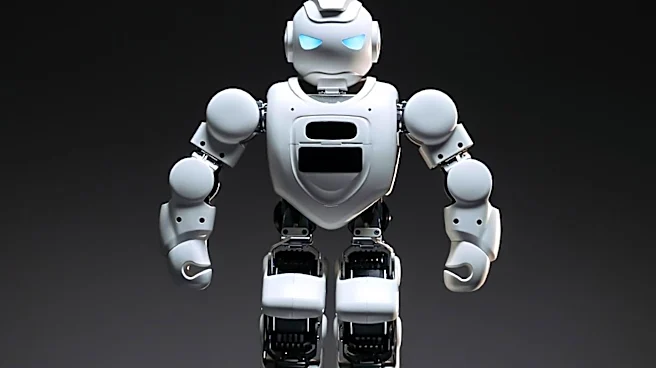
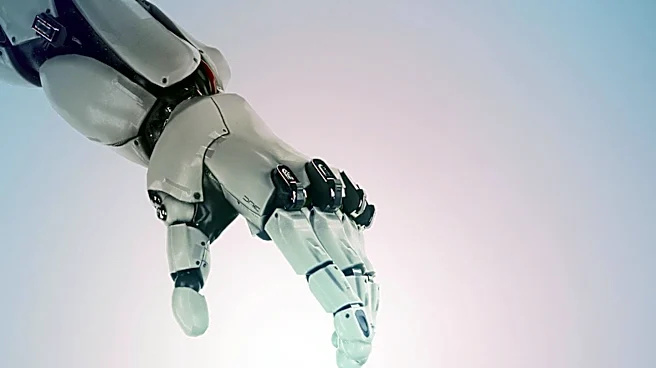
1X, a company specializing in humanoid robots, has introduced a new robotic hand that reportedly matches or exceeds human hand performance. This development addresses what has been termed the 'hands problem' in robotics, a challenge involving the creation
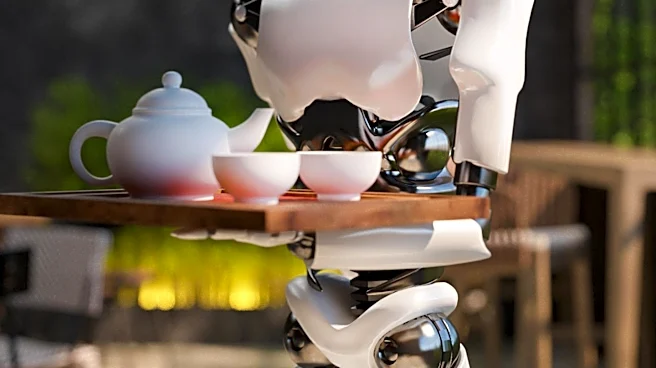
of a mechanical hand that can replicate the complex movements of a human hand. The new hand, part of 1X's NEO robot, features 25 degrees of freedom, allowing it to perform tasks such as pouring tea, sorting grapes, and even communicating in sign language. The hand is also waterproof and robust enough to carry grocery bags. 1X's head of product, Dar Sleeper, claims this is the closest any robotic hand has come to human-level dexterity. The company has been backed by significant investments, including $100 million raised in 2024, and plans to start shipping the NEO robots to early customers in 2026.
Why It's Important?
The development of a robotic hand with near-human dexterity could significantly impact various industries, particularly those involving automation and artificial intelligence. By solving the 'hands problem,' 1X could enable robots to perform a wider range of tasks, potentially transforming sectors like manufacturing, healthcare, and domestic services. This advancement may lead to increased efficiency and reduced labor costs, as robots could take over tasks that require fine motor skills. Additionally, the ability to train robots using videos of human tasks could accelerate the integration of AI in everyday life, making robots more adaptable and useful in diverse environments. However, this also raises questions about the future of human labor and the ethical implications of widespread robotic automation.
What's Next?
1X plans to begin shipping its NEO robots to early customers in 2026, with production facilities capable of manufacturing up to 250,000 robots annually. The company has already received 10,000 preorders, indicating strong market interest. As 1X and other companies like Weave Robotics and Sunday Robotics continue to develop home robots, competition in the market is expected to intensify. This could lead to rapid advancements in robotic technology and increased accessibility for consumers. Stakeholders, including investors and policymakers, will likely monitor these developments closely, considering both the economic opportunities and potential societal impacts.
Beyond the Headlines
The introduction of highly dexterous robotic hands could have profound cultural and ethical implications. As robots become more capable of performing tasks traditionally done by humans, there may be a shift in how society views labor and productivity. This could lead to debates about the role of robots in the workforce and the potential need for new regulations to address issues such as job displacement and privacy concerns. Additionally, the ability of robots to learn from human behavior through video analysis raises questions about data privacy and the ethical use of AI in monitoring and replicating human actions.