

What's Happening?
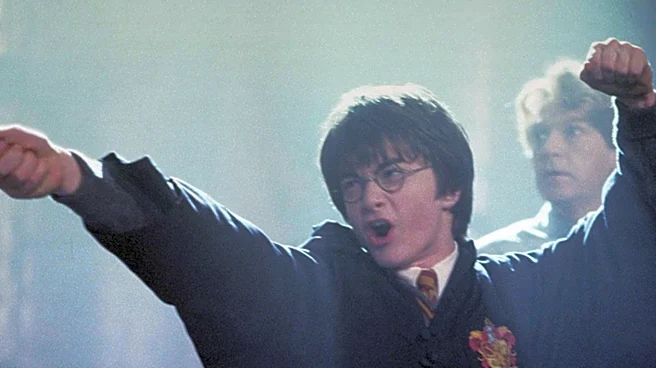
HBO is set to premiere its reboot of the 'Harry Potter' series on December 25, 2026, with Dominic McLaughlin cast in the titular role of Harry Potter. The first season, titled 'Harry Potter and the Philosopher's Stone,' will consist of eight episodes,
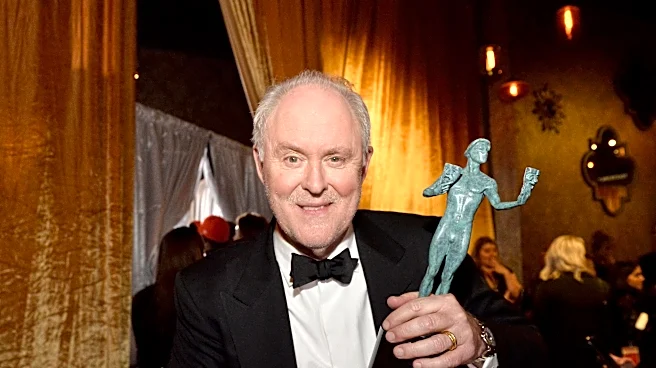
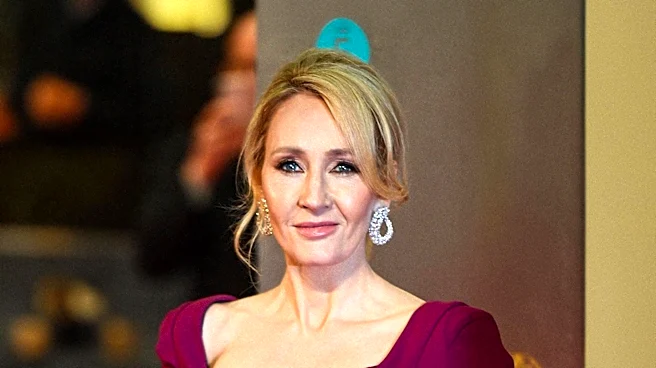
significantly expanding on the screen time of the original film adaptation. Francesca Gardiner is writing and executive producing the series, with Mark Mylod directing. J.K. Rowling is also involved as an executive producer. The cast for the central trio includes Arabella Stanton as Hermione Granger and Alastair Stout as Ron Weasley. Other notable cast members include John Lithgow as Albus Dumbledore, Janet McTeer as Minerva McGonagall, Paapa Essiedu as Severus Snape, and Nick Frost as Rubeus Hagrid. Warwick Davis will reprise his role as Professor Flitwick from the original film franchise. The series has already been renewed for a second season before its initial premiere, with work reportedly underway.
Why It's Important?
The reboot of the 'Harry Potter' series by HBO carries significant importance for the entertainment industry and its vast global fanbase. The decision to adapt the books into a series format allows for a more comprehensive storytelling approach, addressing previous criticisms that the films omitted crucial details and storylines. This expanded format aims to satisfy long-time fans who desire a more faithful adaptation of J.K. Rowling's original works. The involvement of Rowling as an executive producer also signals a level of authenticity and oversight that could reassure fans. The series is poised to introduce the Wizarding World to a new generation while also appealing to millennials who grew up with the original books and films, tapping into a powerful sense of nostalgia. The casting of new, relatively unknown actors in the lead roles, alongside established stars, could launch new careers, much like the original film franchise did.
What's Next?
With the premiere scheduled for December 25, 2026, anticipation for HBO's 'Harry Potter' series is expected to build significantly. The early renewal for a second season indicates strong confidence from HBO in the project's potential success and long-term viability. Viewers can anticipate further marketing campaigns, including additional trailers and behind-the-scenes content, as the release date approaches. The series will likely face intense scrutiny from both critics and fans, particularly regarding its faithfulness to the source material and the performances of the new cast. The success of the first season will heavily influence the trajectory of subsequent seasons and could set a new standard for adapting beloved literary franchises into long-form television. The series also has the potential to reignite interest in the broader Wizarding World franchise, potentially leading to new merchandise, spin-offs, or other related projects.
Beyond the Headlines
The HBO 'Harry Potter' series reboot delves deeper than just a simple re-telling of a popular story; it reflects broader trends in the entertainment industry concerning intellectual property and audience engagement. The decision to reboot a franchise that concluded relatively recently highlights the industry's reliance on established IPs to guarantee viewership in a crowded streaming landscape. Furthermore, the series aims to address contemporary societal issues through the lens of the magical world, with themes like fascism, racism, and discrimination being re-examined through the narrative of Voldemort and his ideology. This approach suggests an attempt to make the story relevant to current generations, offering a metaphorical framework for understanding modern challenges. The series also taps into a generational divide, aiming to appeal to both nostalgic millennials and younger audiences who may not have experienced the original phenomenon, potentially fostering intergenerational viewing experiences and discussions.