




What's Happening?
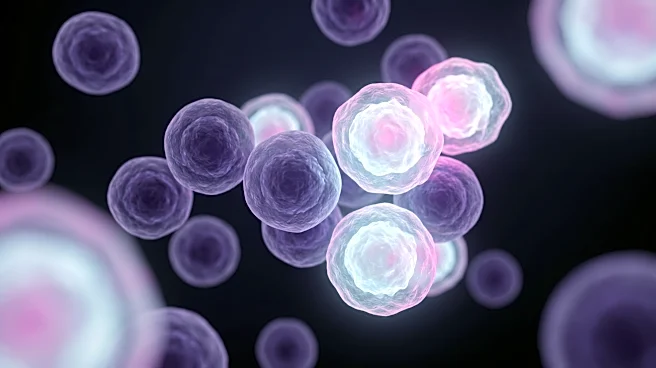
Researchers at EMBL Barcelona have developed a new method to grow bovine tissue containing muscle fibers, neurons, and blood vessel networks from a single source of embryonic stem cells within 15 days. This breakthrough, published in Nature Communications,
addresses a significant challenge in cultivated meat production: recreating the complex structure of real tissue. Unlike previous methods that rely on adult stem cells with limited differentiation capabilities, this approach uses embryonic stem cells that can divide indefinitely and develop into multiple cell types without genetic modification. By adjusting growth factors, the team guided these cells to self-organize into small tissue aggregates, mimicking natural tissue development. While the aggregates are currently small (0.6 mm), this method represents a crucial step towards creating larger, more complex cultivated meat products, particularly by enabling the formation of blood vessel-like networks essential for nutrient delivery in thicker tissues.
Why It's Important?
This research holds significant importance for the future of the cultivated meat industry, particularly in the U.S., by offering a pathway to produce more realistic and complex meat structures. Current cultivated meat products often struggle to replicate the texture and mouthfeel of traditional whole cuts due to the difficulty in growing multiple tissue types together. The ability to grow muscle, nerve, and blood vessel cells simultaneously from a single embryonic stem cell source could lead to cultivated steaks and other whole-cut products that are virtually indistinguishable from their animal-derived counterparts. This advancement could enhance consumer acceptance, which is a major hurdle for the industry, and potentially accelerate the commercialization of high-quality cultivated meat. Furthermore, by avoiding genetic modification and animal serum, the method addresses key concerns regarding regulatory approval and ethical considerations, making cultivated meat a more viable and appealing alternative to conventional meat production.
What's Next?
While this is a proof of concept, the next steps involve scaling up the tissue size and developing more mature blood vessel networks to support continued growth, which is essential for producing steak-like products. Researchers will also need to find animal-free replacements for materials like Matrigel, currently used in the process, to ensure the final product is entirely animal-free and suitable for food use. Cost remains a significant barrier, with current small aggregates priced between €0.39 and €0.99, primarily due to growth factors and reagents. Future efforts will focus on reducing these costs to make cultivated meat economically feasible for large-scale production. This research also provides a valuable platform for studying tissue formation, which could have broader applications in regenerative medicine and tissue engineering beyond food production. Continued investment in research and development will be crucial to overcome these challenges and bring complex cultivated meat products to market.
Beyond the Headlines
This scientific advancement has profound implications for how we perceive and produce food. By demonstrating the ability to grow complex, self-organizing tissues in a lab, it pushes the boundaries of what is considered 'meat' and challenges traditional notions of agriculture. The use of embryonic stem cells, while avoiding genetic modification, may still raise ethical questions for some consumers, highlighting the ongoing societal debate surrounding biotechnology in food. This research also underscores the potential for scientific innovation to address global challenges such as food security and environmental sustainability by offering alternatives to resource-intensive livestock farming. However, the journey from lab-grown tissue to a commercially viable and widely accepted steak involves not only scientific and economic hurdles but also navigating complex consumer perceptions, regulatory landscapes, and cultural values surrounding food. The long-term success will depend on a holistic approach that integrates scientific progress with ethical considerations and effective public engagement.