





What's Happening?
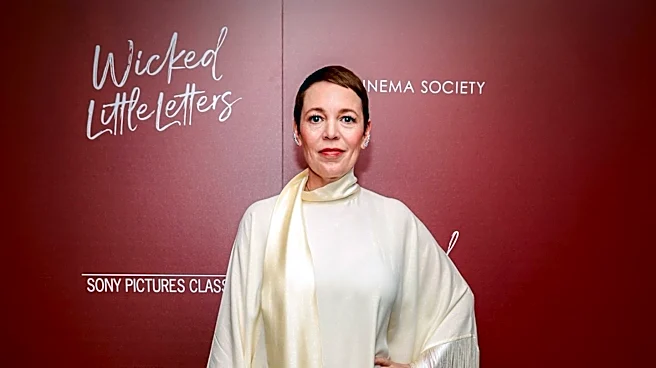
Actress Olivia Colman recently shared insights into her 25-year marriage to Ed Sinclair during an interview promoting her new film, 'Wicker'. Colman described their relationship dynamics, emphasizing that they are 'not conflict people' and have learned
to communicate gently about disagreements. She highlighted the importance of choosing the right moment to discuss issues, rather than confronting them in the heat of the moment. Colman also reiterated her previous statements about her identity, where she has described herself as the 'gay man' in her marriage and 'feels non-binary'. She explained that she has always felt uncomfortable with rigid gender roles and that her husband understands this aspect of her identity. The couple met in the 1990s at Cambridge University and fell in love while rehearsing for a play. Sinclair, initially a law student, later pursued acting before becoming a screenwriter and producer, notably writing the 2021 series 'Landscapers' starring Colman and producing 'The Roses', which also features Colman and Benedict Cumberbatch.
Why It's Important?
Olivia Colman's public discussion of her marriage and personal identity offers a significant contribution to ongoing conversations about modern relationships, gender roles, and self-perception within the public sphere. Her candidness about feeling 'non-binary' and identifying as the 'gay man' in her marriage challenges traditional societal norms and expectations, potentially fostering greater understanding and acceptance for individuals who do not conform to binary gender identities. As a prominent figure in the entertainment industry, Colman's statements can influence public discourse and encourage a more inclusive dialogue around identity. Furthermore, her insights into maintaining a long-term marriage, particularly her emphasis on gentle communication and avoiding conflict, provide a relatable perspective for many, highlighting the complexities and efforts involved in sustaining a partnership. The collaboration with her husband, Ed Sinclair, on various projects also underscores the intertwining of personal and professional lives in creative industries, showcasing a dynamic partnership that extends beyond their marriage.
What's Next?
As Olivia Colman continues to promote her new film 'Wicker', her comments on marriage and identity are likely to generate further discussion and media attention. The film itself, which explores themes of marriage, gender roles, and societal expectations, may gain additional relevance and scrutiny in light of Colman's personal reflections. Her ongoing work with her husband, Ed Sinclair, particularly on projects like 'The Roses', suggests a continued professional collaboration that could further explore or reflect these themes. The broader impact of her statements may be seen in increased public dialogue around non-binary identities and evolving understandings of gender, potentially influencing how these topics are portrayed and discussed in media and entertainment. Future interviews and public appearances by Colman may delve deeper into these subjects, offering more nuanced perspectives on her experiences and beliefs.
Beyond the Headlines
Beyond the immediate news of her film promotion, Olivia Colman's remarks touch upon deeper societal shifts regarding gender and identity. Her comfort in expressing a non-binary feeling, even within a heterosexual marriage, highlights a growing awareness and acceptance of diverse gender experiences that transcend traditional definitions. This challenges the binary framework often imposed by society and media, encouraging a more fluid and personal understanding of self. The ethical implication lies in the power of celebrity to normalize and validate experiences that might otherwise be marginalized. By openly discussing her identity, Colman contributes to a cultural environment where individuals feel more empowered to define themselves authentically. This also subtly critiques the historical rigidity of gender roles in relationships, suggesting that successful partnerships can thrive on mutual understanding and acceptance of individual complexities, rather than adherence to conventional archetypes. Her statements could inspire broader conversations about how language and self-identification evolve to better represent the spectrum of human experience.