







What's Happening?
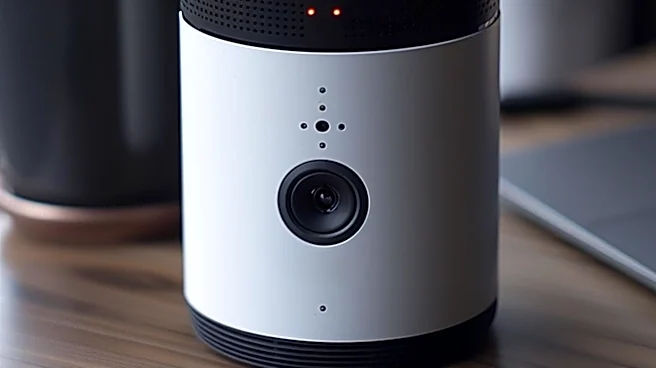
GS Engineering & Construction has announced plans to implement advanced AI Home systems, co-developed with LG Electronics, into its residential brand 'Xi' housing complexes starting in the second half of next year. The core of this initiative is to create
autonomous living environments that understand and adapt to residents' lifestyles using generative AI. These AI Homes will allow residents to control appliances and lighting through natural language commands, with the system eventually anticipating needs, such as automatically shutting off gas valves when children arrive home or detecting indoor emergencies and alerting external parties. Additionally, the company will introduce the 'IX Platform,' utilizing smart prefab technology to enable flexible indoor layouts with movable walls, allowing residents to reconfigure spaces as needed. The complexes will also feature real-time detection and disaster prevention systems to address climate change impacts like heatwaves and heavy rainfall.
Why It's Important?
This development signifies a major step towards fully integrated, intelligent living spaces, potentially setting a new standard for residential construction. The introduction of AI that anticipates resident needs could significantly enhance convenience, safety, and energy efficiency in homes. For the U.S. market, this trend indicates a future where smart home technology moves beyond simple automation to proactive, personalized environmental management. This could influence consumer expectations for new housing developments and drive innovation among U.S. homebuilders and technology providers. The emphasis on flexible spatial configurations also reflects a growing demand for adaptable living environments, which could impact architectural design and interior planning in the residential sector. Furthermore, the integration of climate change response systems highlights a growing industry focus on resilient and sustainable housing solutions.
What's Next?
The initial rollout of these AI Home systems is scheduled for housing complexes in the second half of next year. This will likely serve as a pilot phase, providing valuable data and feedback for further refinement and expansion. Other construction companies and smart home technology providers will be closely observing the success and adoption rates of these advanced features. We can anticipate increased competition in the smart home market, with companies striving to offer more sophisticated AI-driven solutions. The integration of movable walls and smart prefab technology could also lead to new construction methodologies and design trends. Future developments may include broader applications of AI for remote healthcare monitoring and automated administrative tasks within the home, further transforming daily living.
Beyond the Headlines
The shift towards AI-powered autonomous homes raises several deeper implications. Ethically, the extent of AI's predictive capabilities and data collection within private residences will become a significant discussion point, particularly concerning privacy and data security. Legal frameworks may need to evolve to address issues related to AI decision-making in emergency situations and the responsibilities of manufacturers and homeowners. Culturally, these homes could alter human interaction with living spaces, potentially fostering a more passive relationship with the immediate environment as AI handles more tasks. The long-term impact on energy consumption, while aiming for efficiency, also depends on the overall energy footprint of these complex AI systems. This evolution could also lead to a digital divide, where access to such advanced living environments becomes a marker of socioeconomic status.