




What's Happening?
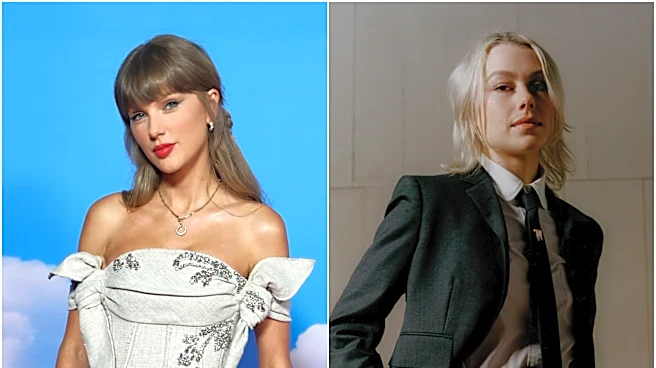
Phoebe Bridgers' new album, 'Lost Weekend,' released six years after 'Punisher,' is generating significant discussion due to lyrics that fans believe allude to her past relationship with actor Paul Mescal and his current partner, Gracie Abrams. The song
'Lost Weekend' includes the line, 'I was supposed to be married, but I canceled it,' which is interpreted as a reference to Bridgers' rumored engagement and subsequent breakup with Mescal in 2022. Another track, 'The Governor's Waltz,' features lyrics like 'And she can pretend she's like me / since she took my place, in my bed, on that stage,' leading to speculation that 'she' refers to Gracie Abrams, who began dating Mescal in 2024. While Bridgers has not confirmed these interpretations, the theories are widely circulating online, fueled by the fact that both Bridgers and Abrams are singer-songwriters with similar styles, and Abrams has acknowledged Bridgers' influence on her music.
Why It's Important?
The public's intense scrutiny of Phoebe Bridgers' lyrics and their connection to her personal life highlights the evolving relationship between artists, their work, and fan culture in the digital age. This phenomenon can significantly impact an artist's public image and the reception of their music, as personal narratives often become intertwined with artistic interpretation. For Bridgers, the speculation could drive album sales and engagement, but it also risks overshadowing the musical and lyrical complexities of her work with celebrity gossip. For Gracie Abrams, being drawn into this narrative, even indirectly, could increase her public profile but also expose her to unwanted comparisons and scrutiny. This situation underscores how social media and fan theories can shape public perception and influence the discourse around popular culture figures, potentially affecting their careers and personal lives.
What's Next?
Phoebe Bridgers is likely to continue promoting her new album, 'Lost Weekend.' The ongoing speculation about the lyrical content may lead to questions during interviews, which she may choose to address or deflect. The album's themes of grief, family, love, breakups, and new beginnings will be further explored by listeners and critics. The heightened interest generated by the rumored allusions to Paul Mescal and Gracie Abrams could sustain public attention on the album for an extended period. For Gracie Abrams, this situation might increase her visibility, potentially leading to more media attention or fan engagement, though it also carries the risk of being defined by her association with this narrative rather than her own artistic merit. The dynamic between these artists and their fan bases will likely continue to evolve as new interpretations and theories emerge.
Beyond the Headlines
This situation delves into the ethical considerations of interpreting an artist's personal life through their creative output. While artists often draw from personal experiences, the public's tendency to directly attribute lyrics to specific individuals can blur the lines between art and reality, potentially infringing on privacy. It also reflects a broader cultural fascination with celebrity relationships and breakups, often fueled by social media, where fan communities actively engage in detective-like analysis of public figures' lives. This can create a feedback loop where artists' personal lives become content, and their art is then consumed through that lens. The phenomenon raises questions about the boundaries of artistic expression, the right to privacy for public figures, and the impact of fan culture on the narratives surrounding artists.