







What's Happening?
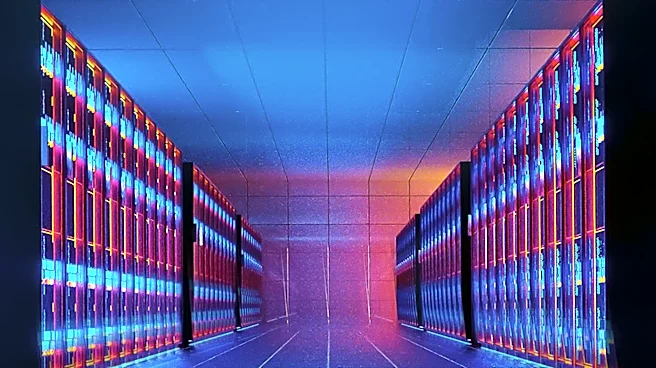
BlackRock Investment Institute is directing investor attention towards the energy infrastructure sector as a key area for growth in the AI economy. The firm emphasizes the importance of electricity, power equipment, and grid connections in supporting
data centers, which are crucial for AI operations. This shift comes as U.S. electricity generation has seen a significant increase since 2024, growing by approximately 9 terawatt-hours per month. This growth is driven by the demand from hyperscalers and data center operators who are increasingly planning to generate power directly on-site. ING estimates that over 55 gigawatts of behind-the-meter capacity is planned for U.S. data centers, primarily from natural gas turbines, engines, and fuel cells.
Why It's Important?
The focus on energy infrastructure highlights a critical bottleneck in the AI economy, where the demand for electricity is outpacing traditional utility supply. This has led to a rise in on-site power generation by data centers, which could reshape the energy landscape. The increase in electricity demand and prices, particularly in states like Ohio, underscores the broader implications for consumers and the energy market. The situation presents investment opportunities in infrastructure and energy security, as well as challenges related to local politics and permitting processes.
What's Next?
As the demand for AI-related infrastructure grows, stakeholders in the energy sector may need to adapt to new market dynamics. This includes addressing the political and regulatory challenges associated with increased electricity prices and the need for more efficient power generation solutions. The development of on-site power generation capacity by data centers could lead to further innovations in energy technology and infrastructure investment.
Beyond the Headlines
The shift towards on-site power generation by data centers reflects a broader trend of decentralization in the energy sector. This could lead to long-term changes in how electricity is produced and consumed, with potential impacts on energy policy and regulation. The emphasis on energy security and infrastructure investment also highlights the interconnectedness of technology and energy markets in the evolving AI economy.