






What's Happening?
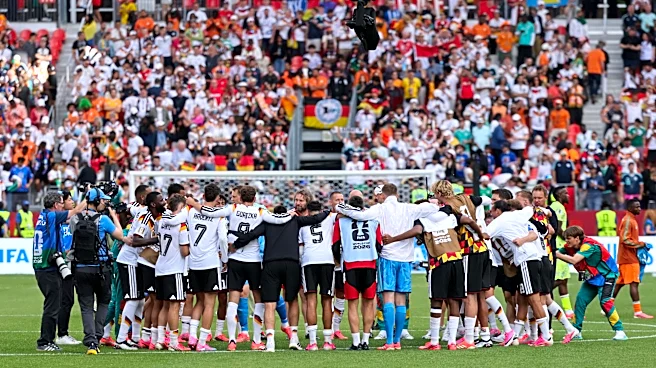
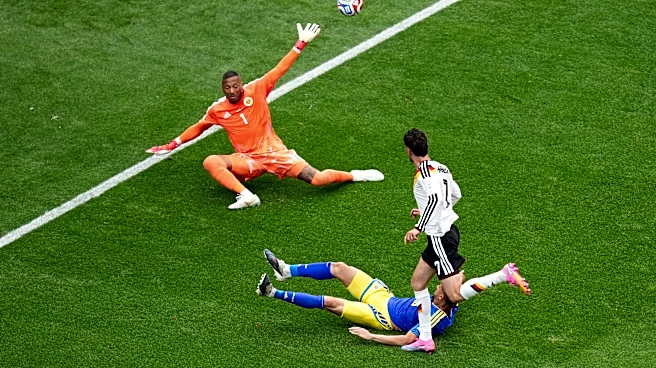
Germany's national soccer team secured a 2-1 victory over Ivory Coast in the 2026 FIFA World Cup, advancing to the Round of 32. Despite the win, the match, broadcasted by ZDF, attracted fewer viewers compared to Germany's previous game against Curaçao.
According to AGF video research, the match had an average of 18.264 million viewers, a decrease from the 23.427 million who watched the earlier game. However, the market share for the Ivory Coast match was higher at 72.1%, compared to 70.2% for the Curaçao game. The decline in viewership is attributed to the late kickoff time and the possibility of more people watching in groups, which is not easily measurable. All World Cup games are also available on German Telekom's MagentaTV, though streaming figures are not disclosed.
Why It's Important?
The shift in viewership patterns highlights changing media consumption habits, with more people possibly opting for group viewings or streaming services. This trend could impact advertising strategies and revenue models for broadcasters. The increased market share despite fewer viewers suggests a concentrated audience, which could be more valuable to advertisers. The performance of the German team also boosts national morale and interest in soccer, potentially influencing youth participation in sports and related industries.
What's Next?
Germany will face its next opponent in the Round of 32 on June 29 in Boston. The team's continued success could further influence viewership trends and national interest in the World Cup. Broadcasters may adjust their strategies to capture larger audiences, possibly by enhancing streaming services or offering more interactive viewing experiences. The outcome of Germany's future matches will likely affect national pride and the economic impact of the World Cup on related sectors.