
What's Happening?
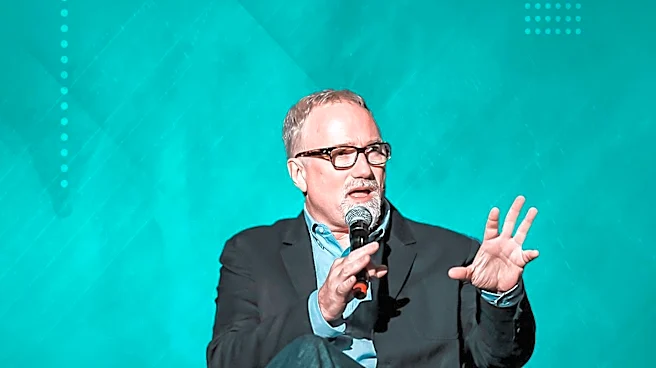
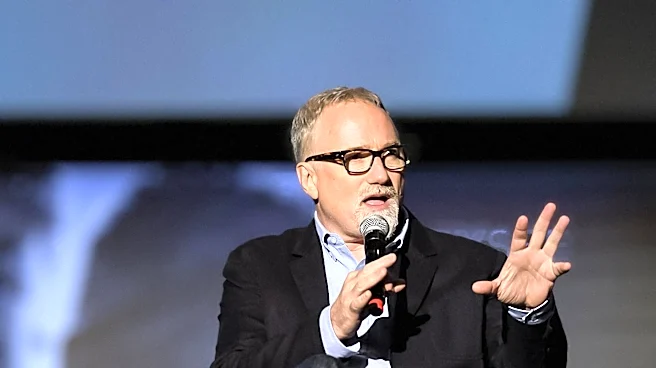
Renowned filmmaker David Fincher has indicated that his latest movie, 'The Further Mis-Adventures of Cliff Booth,' could potentially be his last directorial effort. Speaking on The Ringer’s Big Picture
podcast, Fincher, who is 64 years old, cited changing priorities and a decrease in patience as primary reasons for considering retirement. He expressed a growing dissatisfaction with the industrialization of filmmaking, emphasizing that storytelling should remain an intimate process. Fincher also voiced concerns about the inherently wasteful nature of movie production, advocating for more streamlined approaches in the 21st century. He noted that he has been directing since he was 20, and his perspective on the industry has evolved significantly over the decades. The director also addressed the use of AI in 'Cliff Booth,' stating that while he is not anti-humanity or against paying people, he believes in leveraging technology to make the process more efficient rather than simply throwing manpower at problems. The film, a sequel to Quentin Tarantino's 'Once Upon a Time in Hollywood,' stars Brad Pitt and is set to premiere on Netflix on December 23rd after an IMAX release.
Why It's Important?
Fincher's potential retirement marks a significant moment for the American film industry, as he is a director known for his distinctive style and critically acclaimed works. His comments on the industrialization of cinema and the increasing use of AI reflect broader discussions within Hollywood about the future of filmmaking, creative control, and the role of technology. If Fincher were to step away, it would remove a prominent voice from the directorial landscape, potentially influencing the types of projects greenlit and the creative approaches taken by studios. His critique of the industry's wastefulness could also spark further conversations about sustainable production practices. Furthermore, his candidness about AI's role in his latest film contributes to the ongoing debate about artificial intelligence in creative fields, impacting how audiences and industry professionals perceive the integration of such technologies in storytelling. This could influence future union negotiations, production budgets, and the artistic integrity of films.
What's Next?
While Fincher has not definitively announced his retirement, his statements suggest a potential shift in his career trajectory. The reception of 'The Further Mis-Adventures of Cliff Booth,' particularly concerning its use of AI, may influence his future decisions and the broader industry's adoption of similar technologies. The film's performance on Netflix and critical reviews will be closely watched, especially in light of Fincher's comments. The ongoing dialogue about AI in filmmaking is likely to intensify, with more directors and studios weighing in on its ethical and practical implications. Fincher's advocacy for more streamlined production methods could also encourage other filmmakers to explore innovative, less wasteful approaches. The industry may see increased discussions about work-life balance for filmmakers, as Fincher explicitly mentioned his desire for shorter workdays. His remarks could also inspire a new generation of filmmakers to challenge traditional production models.
Beyond the Headlines
Fincher's contemplation of retirement and his critique of the film industry delve into deeper issues concerning artistic integrity versus commercial pressures. His sentiment that 'storytelling is an intimate thing' stands in contrast to the 'industrialization' of cinema, highlighting a tension between art and commerce that has long existed in Hollywood. The director's embrace of AI, while acknowledging its controversial nature, suggests a pragmatic view of technology as a tool to enhance creative freedom and efficiency, rather than solely a threat to human artistry. This perspective challenges the often-binary debate surrounding AI in the arts. His desire for a better work-life balance also reflects a growing trend across various industries, questioning the sustainability of demanding production schedules. Ultimately, Fincher's reflections could prompt a re-evaluation of what constitutes 'successful' filmmaking, moving beyond box office numbers to include considerations of artistic fulfillment, ethical production, and the well-being of creators.