




What's Happening?
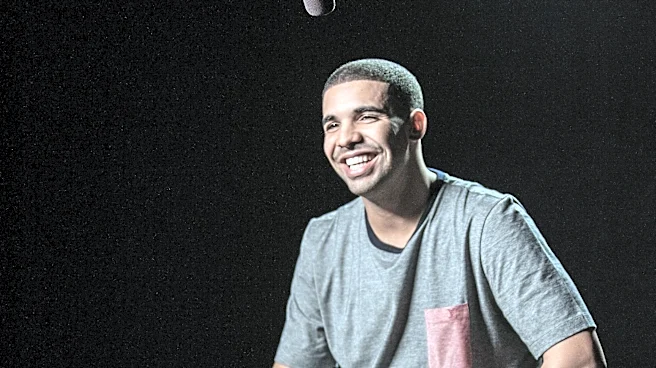
Rice University has stated that rapper Drake filmed a portion of a music video on its Houston campus without the institution's knowledge or permission. The video in question is for Future's song "Ya Hit," where Drake's verse includes scenes shot inside
James Turrell's Twilight Epiphany Skyspace, a public art installation on the university grounds. Chris Stipes, Rice's executive director of news and media relations, confirmed that neither the Moody Center for the Arts nor Rice University was aware of or involved in the production. The university requires prior authorization for commercial filming on its campus, a protocol that was not followed in this instance. The music video intercuts scenes from the Skyspace with footage from Area 29, a strip club located approximately 11 miles from Rice University. Other artists featured in the track include Houston native Travis Scott and Florida rapper Loe Shimmy.
Why It's Important?
This incident highlights potential challenges for institutions managing public access to their facilities and intellectual property, especially when dealing with high-profile individuals. For Rice University, the unauthorized filming raises questions about campus security protocols and the enforcement of commercial filming policies. While the university acknowledges the broad appeal of its public art collection and welcomes visitors, the use of its property for commercial purposes without consent could set a precedent or lead to further unauthorized uses. For artists and production companies, the situation underscores the importance of securing proper permissions and clearances before utilizing private or public property for commercial projects, to avoid legal disputes or reputational damage. The incident also brings attention to the intersection of art, public spaces, and commercial media production.
What's Next?
It remains unclear whether Rice University will pursue any further action against Drake or the music video's production team for the unauthorized filming. The university's statement indicated that while commercial filming requires authorization, they also recognize the appeal of their art collection and welcome visitors. This suggests a potential for a measured response, possibly focusing on reinforcing their policies rather than immediate legal action. The incident may prompt Rice University to review and potentially strengthen its procedures for monitoring and controlling commercial activities on campus, particularly around its popular public art installations. Other institutions with similar public art or accessible grounds might also re-evaluate their own policies and enforcement mechanisms to prevent similar occurrences.
Beyond the Headlines
Beyond the immediate issue of unauthorized filming, this event touches upon broader themes of artistic appropriation and the use of public or semi-public spaces in media. James Turrell's Skyspace is a significant art installation, and its unsolicited inclusion in a commercial music video raises questions about artistic integrity and the artist's intent versus commercial exploitation. While the university owns the physical space, the artwork itself carries its own artistic and cultural value. The incident also reflects the evolving landscape of content creation, where rapid production and distribution can sometimes bypass traditional protocols. It underscores the tension between the desire for creative freedom and the need to respect property rights and institutional regulations, particularly in an era where visual content can quickly go viral and establish associations without formal consent.