









What's Happening?
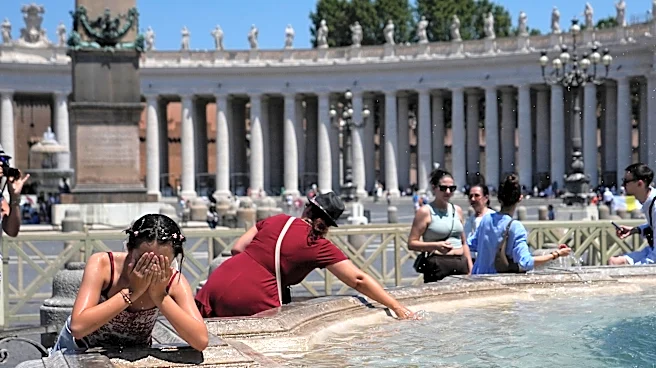
The recent men's Paris Fashion Week was marked by extreme heat and notable fashion trends. Pharrell Williams' Louis Vuitton show, featuring a sandy beach and artificial wave, sparked controversy due to its timing with a heatwave in France. Critics on social
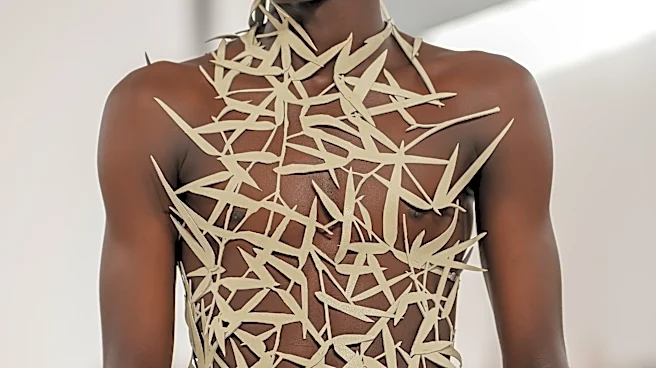
media questioned the extravagance of the setup. The event also highlighted a shift in men's fashion towards 'reinventing masculinity,' with designers incorporating feminine elements like transparencies and lingerie references. This edition of Fashion Week showcased a blend of traditional and modern styles, with designers like Dries Van Noten and Jonathan Anderson leading the charge.
Why It's Important?
The controversy surrounding the Louis Vuitton show highlights the growing scrutiny of luxury brands' environmental and social responsibilities. The use of significant resources for fashion shows is increasingly questioned in the context of climate change and sustainability. The trend towards 'reinventing masculinity' reflects broader societal shifts in gender norms and the fashion industry's role in challenging traditional gender roles. These developments can influence consumer expectations and drive changes in how fashion brands approach design and marketing, potentially impacting the industry's future direction.
What's Next?
As the fashion industry continues to evolve, brands may face increased pressure to balance creativity with sustainability. The response to the Louis Vuitton show could prompt other brands to reconsider their event strategies, focusing on more sustainable practices. The trend towards gender-fluid fashion is likely to continue, with designers exploring new ways to blend masculine and feminine elements. This could lead to more inclusive fashion lines and influence mainstream fashion trends. Stakeholders, including designers, consumers, and environmental advocates, will play a crucial role in shaping the industry's future.