




What's Happening?
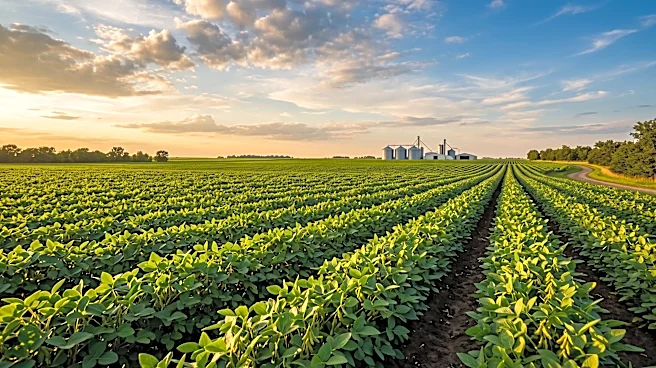
Kansas soybean farmers are prioritizing in-person visits and direct engagement with international buyers to foster relationships and expand export markets, a strategy deemed more effective than virtual interactions. Bob Haselwood, a Kansas Soybean commissioner,
has hosted numerous foreign trade teams at his Berryton farm over two decades, highlighting the impact of showing buyers the actual soybean fields. This approach is crucial for establishing and maintaining markets, as it allows farmers to demonstrate the quality and sustainability of U.S. soybeans. Recently, Haselwood hosted a trade team from Sri Lanka and Nepal, participants in Soy Connext, the U.S. Soybean Export Council’s annual global event. These visits aim to diversify export markets beyond major buyers like China, focusing on countries with growing demand for high-quality protein sources like poultry, meat, and eggs, where U.S. soy holds significant market share.
Why It's Important?
This emphasis on direct engagement by Kansas soybean farmers is vital for the U.S. agricultural sector, particularly for soybean exports. Building personal relationships with international buyers helps differentiate U.S. soybeans from competitors, ensuring continued demand and stable prices for American farmers. Diversifying export markets, as exemplified by targeting countries like Sri Lanka and Nepal, reduces reliance on a few large buyers and insulates farmers from potential political disruptions or economic downturns in specific regions. The focus on quality, sustainability, and the advantages of U.S. transportation infrastructure provides a strong selling point. This strategy directly impacts the economic well-being of U.S. soybean farmers by securing and expanding their customer base, ultimately contributing to the national agricultural economy and maintaining the U.S.'s position as a leading agricultural exporter.
What's Next?
Kansas soybean farmers and the U.S. Soybean Export Council are expected to continue and potentially expand their efforts in hosting international trade teams and participating in global events like Soy Connext. The success of these in-person engagements will likely encourage more farmers to adopt similar strategies for market development. Future initiatives may include targeted marketing campaigns emphasizing the specific benefits of U.S. soy, such as its quality for livestock feed and sustainable farming practices. The focus on emerging markets with rising disposable incomes and increasing protein demand will remain a key component of their export strategy. Additionally, ongoing research and development into soybean quality and sustainable farming methods will be crucial to maintain a competitive edge and provide compelling arguments for international buyers.
Beyond the Headlines
The practice of Kansas soybean farmers hosting international trade teams underscores a deeper truth about global commerce: the enduring value of human connection and trust in an increasingly digital world. While technology offers efficiency, the personal touch of walking through a soybean field and directly engaging with producers builds a level of confidence and understanding that virtual meetings often cannot replicate. This approach highlights the cultural dimension of trade, where relationships can be as important as price or quality. It also reflects a proactive adaptation by the agricultural sector to global market dynamics, recognizing that simply producing a crop is not enough; effective marketing and relationship-building are essential. This strategy could serve as a model for other U.S. industries seeking to strengthen their international market presence, demonstrating that authentic engagement can lead to more resilient and diversified trade relationships.