






What's Happening?
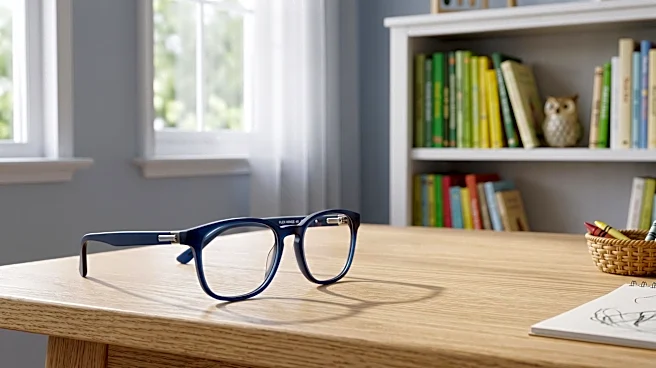
Actress Lee Min-jung recently shared her emotional reaction to her elementary-school-aged son, Jun Hoo, developing worsening eyesight and now requiring glasses. This personal revelation was made during a video posted on her YouTube channel, 'Lee Min-jung MJ,'
where she was seen enjoying a meal at a Chinese restaurant. While introducing the fourth restaurant in her food tour, Lee Min-jung discussed her son's vision, noting that he now has to wear glasses. She expressed being quite taken aback by the news, stating, 'I was startled.' Lee Min-jung also drew a parallel to her own experience, mentioning that she also started wearing glasses in fourth grade and later underwent LASIK surgery, suggesting a genetic component to her son's condition. She highlighted the fascinating aspect of how both eyesight and teeth are influenced by genetics.
Why It's Important?
This personal disclosure by a prominent actress like Lee Min-jung brings attention to a common health issue affecting children globally, including in the U.S. The discussion of genetic predisposition to vision problems can resonate with many parents and families who face similar challenges. It normalizes the experience of children needing glasses and can help reduce any stigma associated with it. For the public, it offers a glimpse into the relatable struggles of celebrity families, fostering empathy and connection. Furthermore, her mention of LASIK surgery provides a real-world example of a common vision correction procedure, potentially informing or reassuring individuals considering such options. The emphasis on genetics also subtly highlights the importance of family health history in understanding individual health trajectories.
What's Next?
Lee Min-jung's candid sharing about her son's eyesight may encourage more open conversations among parents and in public forums about children's vision health. This could lead to increased awareness campaigns or discussions on the importance of early eye examinations for children. Her experience might also prompt parents to consider their own family's genetic history when monitoring their children's health. In the broader context of celebrity influence, such personal stories can contribute to a more humanized perception of public figures, moving beyond their professional roles to reveal their everyday concerns as parents. This could also inspire other celebrities to share similar personal anecdotes, further normalizing common life challenges and fostering a sense of community among their followers.
Beyond the Headlines
The emotional impact of a child's health issue, as expressed by Lee Min-jung, underscores the universal anxieties of parenthood. Her reflection on the genetic aspect of eyesight also touches upon the broader scientific understanding of hereditary traits and their influence on individual health. Beyond the immediate concern for her son, this narrative subtly highlights the societal pressures and expectations placed on children, particularly regarding academic performance and physical well-being, where good eyesight is often taken for granted. The actress's vulnerability in sharing this personal struggle can serve as a powerful reminder that despite fame and fortune, individuals face common human experiences, fostering a deeper sense of shared humanity. It also implicitly encourages a more compassionate and understanding approach to personal health challenges, moving beyond superficial appearances.