






What's Happening?
The Anheuser-Busch Foundation has awarded a $130,000 grant to researchers at the Arkansas Agricultural Experiment Station, part of the University of Arkansas Division of Agriculture. This funding supports ongoing projects focused on rice quality, brewing
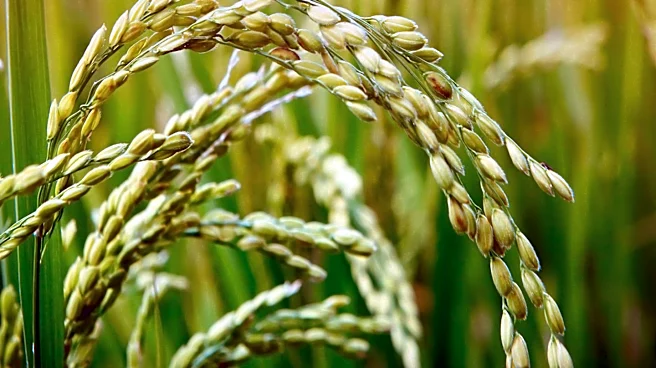
applications, water stewardship, and crop management. The grant is part of a larger initiative by Anheuser-Busch, totaling over $200,000, to support rice research, grower education, and industry partnerships during National Rice Month. Other recipients include the Arkansas State University Rice Program, Ducks Unlimited, and USA Rice. Arkansas is the leading rice-producing state in the U.S., and Anheuser-Busch is the largest domestic end-user of rice, purchasing approximately 20 million bushels annually for its brewing operations. The company sources $700 million worth of ingredients, including rice, barley, and corn, from American farmers each year and maintains long-standing partnerships with 700 farmers nationwide, including over 80 rice farmers in Arkansas.
Why It's Important?
This grant is significant for the U.S. agricultural industry, particularly for Arkansas rice farmers, as it directly supports research aimed at improving rice quality and sustainable farming practices. Anheuser-Busch's substantial investment highlights the critical link between agricultural production and major industries, demonstrating how corporate partnerships can drive innovation and economic stability in the farming sector. The research projects, which include optimizing rice for brewing, enhancing water efficiency through recirculation systems, and developing better crop management techniques, have the potential to increase profitability for farmers and ensure the long-term viability of rice cultivation. This collaboration also underscores the importance of scientific research in addressing agricultural challenges and maintaining the competitiveness of American-grown ingredients in global markets, benefiting both producers and consumers.
What's Next?
The funded research projects at the Arkansas Agricultural Experiment Station will continue to advance studies on factors affecting rice quality and performance in brewing, aromatic rice market research, and the shelf stability of rice products used in lager production. Additional funding will support the evaluation of water-saving recirculation systems for irrigation and research into farming conservation initiatives. The outcomes of these studies are expected to provide Arkansas rice farmers with new knowledge and tools to enhance production efficiency, improve crop quality, and adopt more sustainable practices. Anheuser-Busch, having achieved U.S. Farmed™ certification for several of its American beers, will likely continue its efforts to promote American-grown ingredients and support agricultural research, reinforcing its commitment to domestic farmers and the agricultural supply chain. The ongoing collaboration between industry and academia is anticipated to yield practical applications for the rice industry.
Beyond the Headlines
This partnership between Anheuser-Busch and the University of Arkansas Division of Agriculture exemplifies a growing trend of corporate investment in agricultural research, driven by both supply chain security and sustainability goals. Beyond the immediate benefits to rice farmers, this initiative highlights the broader ethical and environmental responsibilities of large corporations to support the communities and natural resources they rely upon. The focus on water stewardship and sustainable farming practices reflects increasing consumer demand for environmentally conscious products and production methods. This collaboration also underscores the economic interdependence between agricultural producers and industrial consumers, demonstrating how shared interests can lead to mutually beneficial outcomes. It sets a precedent for how other industries can engage with the agricultural sector to foster innovation, resilience, and sustainability, contributing to a more robust and responsible food system.