






What's Happening?
The global demand for smart lighting solutions is experiencing significant growth, with Chinese manufacturers playing a pivotal role in meeting this demand. Companies like Aqara and ORVIBO, based in Shenzhen, Guangdong, are prominent players in this sector.
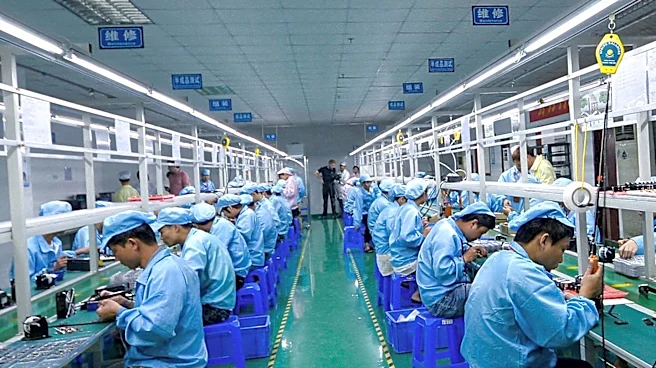
Aqara, operated by Lumi United Technology, specializes in smart home devices, sensors, controllers, and intelligent lighting products, including LED strip lights, smart bulbs, ceiling lights, and spotlights. Their products are designed to integrate with their smart home ecosystem and third-party platforms, supporting technologies such as Zigbee and Matter for enhanced wireless connectivity and home automation. Similarly, ORVIBO offers integrated smart home products and intelligent control solutions, encompassing smart lighting, switches, central control panels, sensors, and smart shading systems. These companies are catering to both residential and commercial projects, emphasizing lighting control, energy efficiency, and product integration. The Chinese market is a major hub for LED product development, electronic control systems, smart home integration, and OEM/ODM manufacturing, providing competitive production costs and flexible customization options for global buyers.
Why It's Important?
The rise of Chinese manufacturers in the smart lighting sector is crucial for the global market due to their ability to offer diverse, energy-efficient, and customizable lighting solutions at competitive prices. This trend impacts U.S. consumers and businesses by increasing the availability of advanced smart lighting products, potentially driving down costs, and fostering innovation in smart home technology. For U.S. distributors, wholesalers, and project contractors, partnering with these manufacturers can provide access to a broad range of products and customization options. The emphasis on technologies like Zigbee and Matter by companies such as Aqara ensures compatibility with various smart home ecosystems, which is vital for seamless integration in U.S. smart homes. The continuous development in smart lighting, including app-controlled LED bulbs, motion-sensor lamps, and intelligent systems, contributes to greater energy efficiency and convenience, benefiting both individual users and large-scale commercial projects in the U.S. market.
What's Next?
The smart lighting market is expected to continue its growth trajectory, with ongoing advancements in connectivity and integration. Manufacturers will likely focus on expanding compatibility with emerging smart home platforms and enhancing user experience through more intuitive control systems. The adoption of technologies like Matter will further streamline the integration of smart lighting with other smart home devices, making these systems more accessible and user-friendly for U.S. consumers. We can anticipate a continued emphasis on energy efficiency and customizable features, driven by consumer demand for sustainable and personalized lighting solutions. The competitive landscape among manufacturers, particularly from China, will likely lead to further innovation and potentially more affordable options for smart lighting products in the U.S. market, influencing product development and market strategies for both domestic and international companies.
Beyond the Headlines
The proliferation of smart lighting technology, spearheaded by manufacturers like those in China, extends beyond mere convenience and energy savings. It signifies a broader shift towards interconnected living environments and the Internet of Things (IoT). The ethical implications of data privacy and security in smart home ecosystems become increasingly relevant as more devices are connected and collect user data. Legal frameworks may need to evolve to address these concerns, particularly regarding data ownership and protection. Culturally, the integration of smart lighting into daily life is transforming how people interact with their living and working spaces, fostering a greater expectation for personalized and automated environments. This trend also highlights the globalized nature of technology development, where innovations from one region quickly influence markets worldwide, including the U.S., leading to a more interconnected and technologically advanced society.