


What's Happening?
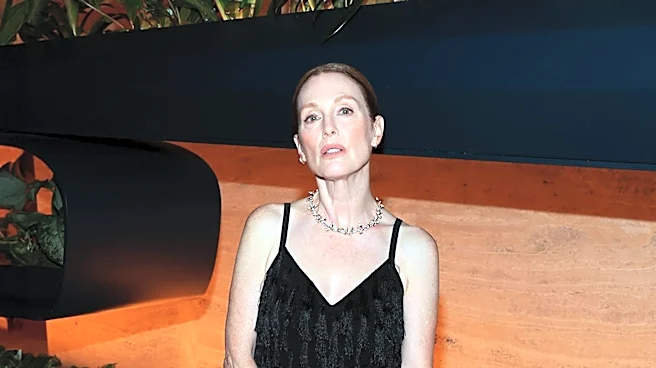
Actress Julianne Moore has provided a tour of her recently renovated West Village duplex penthouse in New York City, which she shares with her husband, director Brett Freundlich. The apartment, located in a 1920s building that was originally a hotel,
is situated on the building's roof and features multiple terraces, including one with an herb garden. Moore collaborated with her brother-in-law, architectural designer Oliver Freundlich, on the eight-month renovation, marking their sixth project together. The home is filled with items Moore has collected over decades, creating a lived-in and personal atmosphere, including kitchen chairs purchased in Paris in 1995 and even a modest piece of Ikea furniture. Moore expressed her preference for 'craft,' 'patina,' and 'texture,' avoiding overly produced items.
Why It's Important?
Julianne Moore's decision to share her home offers a rare glimpse into the personal aesthetic and lifestyle of a prominent public figure, influencing interior design trends and showcasing how celebrity homes can blend luxury with personal history and practicality. Her preference for collected, meaningful items over purely decorative ones highlights a growing trend towards authenticity and sustainability in home decor. The collaboration with her brother-in-law underscores the value of personal connections in design projects and the ability to create spaces that truly reflect the owner's personality. This feature also provides insight into the unique challenges and opportunities of renovating historic New York City properties, particularly rooftop apartments with outdoor spaces, which are highly coveted in urban environments.
What's Next?
While the article focuses on the current state of Julianne Moore's apartment, it implicitly suggests a continued appreciation for thoughtful design and personal curation in her living spaces. Her ongoing collaboration with Oliver Freundlich indicates a sustained partnership for future design projects, whether for other properties or further refinements to her current home. The public's interest in celebrity homes often leads to increased demand for similar design elements or styles, potentially influencing interior design trends and product choices in the broader market. Moore's emphasis on 'craft' and 'patina' may inspire more consumers to seek out unique, handcrafted, or vintage pieces for their own homes.
Beyond the Headlines
Julianne Moore's approach to her home decor, prioritizing items with personal history and 'patina' over new, mass-produced luxury, reflects a deeper cultural shift towards valuing authenticity, sustainability, and storytelling in personal spaces. This ethos challenges the consumerist drive for constant newness and instead champions a more mindful approach to consumption. Ethically, it aligns with principles of reducing waste and appreciating craftsmanship. The blend of high-end design with accessible pieces like Ikea furniture also democratizes the concept of a well-designed home, suggesting that style is not solely dependent on expense but on curation and personal connection. This perspective can inspire individuals to create homes that are true reflections of themselves, fostering a sense of comfort and belonging rather than just showcasing wealth.