







What's Happening?
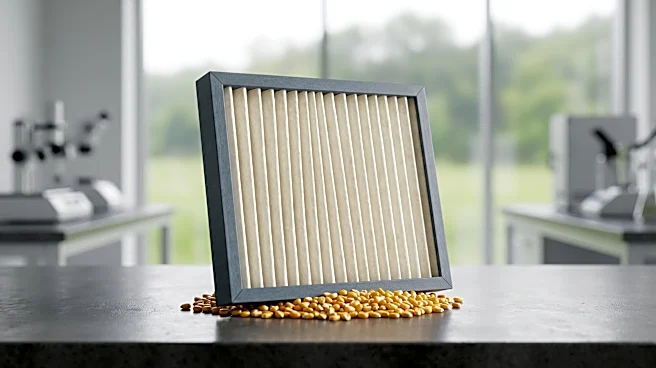
Aerterra, a company that won the National Corn Growers Association’s (NCGA) Consider Corn Challenge, is now utilizing polylactic acid (PLA) derived from corn kernels to produce HVAC air filters. This innovation provides a new market for field corn, moving
beyond its traditional uses in food, feed, and fuel. David and Jeremy Wilson, father-son farmers from Talladega County, Alabama, are among those who see the benefits of this new application. Jeremy Wilson, who serves as president of the Alabama Soybean & Corn Growers Association and is an NCGA state delegate, emphasizes the importance of finding additional uses for corn as farmers increase production efficiency. Aerterra CEO and co-founder Curtis Firestone stated that the company's goal was to find a renewable, better material, which led them to corn-derived PLA as an alternative to petroleum-based materials.
Why It's Important?
This development is significant for the U.S. agricultural sector, particularly corn growers, by diversifying demand and potentially stabilizing prices for their crops. By creating a new industrial application for corn, Aerterra helps reduce reliance on traditional markets and offers farmers an additional revenue stream. Environmentally, the use of corn-derived PLA in HVAC filters presents a sustainable alternative to petroleum-based products, aligning with broader efforts to reduce fossil fuel dependency and promote renewable resources. This shift can contribute to a healthier planet by offering a cleaner option for household items and reducing the environmental footprint of manufacturing. The initiative also highlights the potential for innovation in agriculture to address both economic and environmental challenges, benefiting both farmers and consumers seeking sustainable products.
What's Next?
The success of Aerterra's corn-derived HVAC filters could pave the way for further research and development into other industrial applications for corn and other agricultural products. This could lead to increased investment in bio-based materials and technologies, fostering a more sustainable manufacturing sector. Farmers like the Wilsons will likely continue to advocate for and support such innovations, potentially influencing agricultural policies to encourage the development of new markets for crops. The broader adoption of these filters could also raise consumer awareness about the environmental benefits of bio-based products, driving demand for similar sustainable alternatives in various industries. Continued collaboration between agricultural associations and innovative companies will be crucial for expanding these new uses and maximizing their economic and environmental impact.
Beyond the Headlines
This initiative touches upon the deeper implications of agricultural sustainability and the circular economy. By transforming a common crop into a high-value industrial product, it challenges conventional perceptions of agriculture solely as a food source. It underscores the potential for bio-economy models to create economic resilience for rural communities and reduce the nation's reliance on non-renewable resources. The story also highlights the ingenuity required to bridge the gap between agricultural production and advanced manufacturing, fostering a new era of inter-industry collaboration. Furthermore, it subtly addresses the ethical dimension of resource utilization, promoting a shift towards materials that are renewable and domestically grown, thereby enhancing national self-sufficiency and environmental stewardship.